

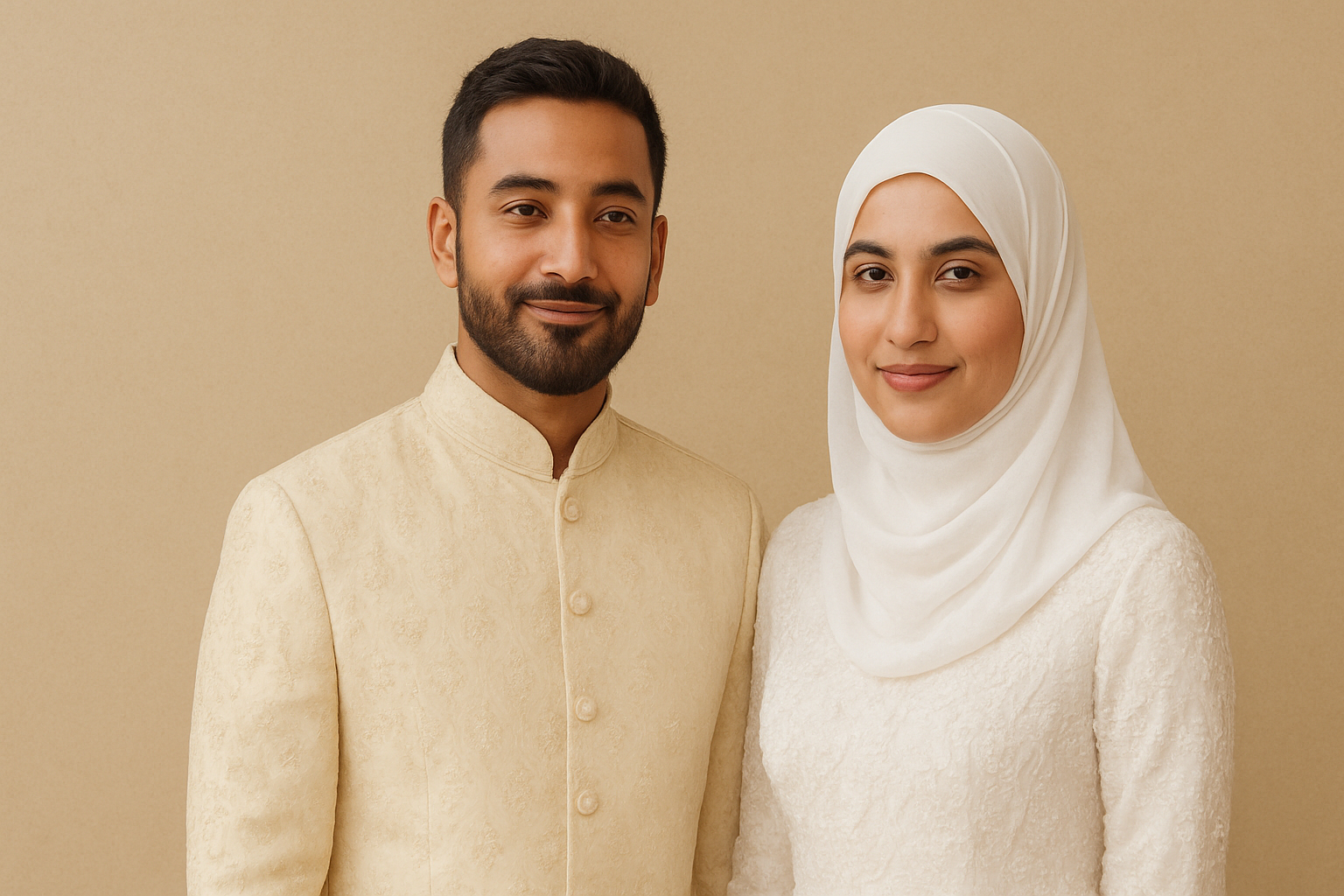
A Sensitive Question Worth Exploring
The claim that South Asians care more about image than happiness recurs in conversations across the diaspora, especially in the UK. It appears in family disputes, community gossip, and social media debates. But is it true, or is it a symptom of wider social pressures and historical realities? To understand this tension, we must move beyond clichés. We need to look at how reputation, family honour, migration stories, and contemporary technology shape decisions about life and marriage.
Importantly, this is not about criticising a community. Rather, it is about exploring a perceived imbalance so that individuals and families can make better choices. It is about how South Asians, navigating British life, manage the trade-offs between image and happiness—and how trusted, ethical services can help realign priorities with values.
The Perfect Picture: Where Reputation Meets Reality
In many South Asian families, reputation acts as social capital. Who you are is entwined with your family’s name, your education, your profession, and your marriage. Moreover, in tight-knit communities, social standing can affect real opportunities: jobs, introductions, and even how fairly people treat you. So when parents urge their children to maintain a certain image, they are not always chasing vanity; they may be protecting what they see as the family’s long-term stability.
However, the pursuit of a perfect image can collide with personal happiness. Some individuals feel pressure to delay relationships until they reach certain professional milestones or to accept proposals that align with family expectations but not with their own values. Others curate a flawless public persona—online and offline—while struggling privately with loneliness or conflict. Consequently, a culture of silence sometimes develops, where people avoid seeking help for fear of “what people will say.”
Roots of Respectability: Family, Faith, and History
To appreciate why image matters, consider the migration backdrop. Many South Asian families came to Britain in search of safety, dignity, and a better future. Along the way, they faced racism, class barriers, and economic uncertainty. In response, they developed robust support networks and social codes that prioritised respectability—professional stability, marital stability, and community cohesion. These ideals offered protection and pride.
Furthermore, South Asian family life often emphasises collective wellbeing. Parents see their children’s choices as interwoven with family fate. In this framework, public image becomes a shorthand for trust and reliability. Faith, too, plays a role: Islam and other traditions from South Asia place importance on modesty, dignity, and family responsibility. While those principles need not contradict personal fulfilment, tensions arise when cultural practices or social media-fuelled comparisons overshadow faith-based ethics of compassion, justice, and mutual respect.
When Image Costs Happiness: Real-Life Trade-offs
Consider the wedding economy. Families sometimes fund large, lavish weddings, even going into debt, to satisfy expectations and impress the community. While celebration is beautiful, the financial burden can haunt a new marriage, increasing stress and limiting options. Meanwhile, couples may feel judged for choosing a simple nikah or a small ceremony. In these situations, image drives decisions more than long-term happiness.
Similarly, the timeline for marriage can become performative. Some feel rushed into early proposals to “beat” community gossip; others delay for years to meet an idealised professional target. Both paths can leave people dissatisfied if they ignore genuine compatibility, character, and spiritual alignment. In parallel, divorce—when necessary—can carry stigma. Even where separation would protect wellbeing, individuals may endure unhealthy dynamics to preserve an image of success.
The Social Media Multiplier
Today, social media amplifies comparisons. Perfect engagements, perfect homes, and perfect careers flood our feeds. Consequently, the gap between private realities and public image widens. People curate and perform, hoping to meet the unspoken standards of peers and relatives. This performance can fuel anxiety and self-doubt, especially among young professionals who already carry multiple expectations from family, faith, and mainstream British culture. Yet, the feelings are complex: many also use social platforms to find community, share achievements, and celebrate identity. The challenge lies in balancing pride with authenticity.
A Shift Is Underway: Younger Voices and Quiet Revolutions
Despite these pressures, many young South Asians are rewriting the narrative. They seek mentors, counsellors, and faith-aligned educators. They ask honest questions about marriage compatibility, mental health, and financial planning. They challenge gossip culture, and they set boundaries with kindness. Significantly, they still honour elders; they simply invite them into new conversations about what truly sustains a marriage.
Moreover, parents are listening. Many want their children to flourish beyond surface metrics. They recognise that real security includes emotional safety, intellectual companionship, and shared values. As these intergenerational dialogues improve, families often find better outcomes: more realistic expectations, healthier proposals, and decisions grounded in mutual respect.
From Pressure to Principles: Islamic Ethics on Dignity and Wellbeing
Islamic principles offer a constructive way forward. The Shariah seeks to protect faith, life, intellect, lineage, and property. In marriage, this translates to dignity, fairness, and mutual rights and responsibilities. A spouse’s character, commitment, and compatibility weigh more than optics. Moreover, the Prophetic tradition emphasises ihsan (excellence) in conduct, rahmah (mercy) in relationships, and the removal of harm. These values do not support performative reputations that harm people’s wellbeing.
Therefore, when families weigh proposals, they can ask: Does this match protect dignity? Does it nurture mutual respect and kindness? Does it enable growth in faith and character? Does it solve real-world challenges rather than creating new ones? When we frame decisions this way, image and happiness need not compete. Image becomes a reflection of integrity rather than a mask for pain.
Practical Pathways: Balancing Image and Happiness in the Marriage Journey
To move from theory to practice, individuals and families can adopt small but powerful habits.
- Define success clearly: Before meeting prospects, write down what a good marriage means in your context—values, communication style, shared life goals, Islamic commitments, and boundaries with extended family. Prioritise essentials over optics.
- Vet character, not just credentials: Education and job stability matter, but kindness, humility, and emotional maturity matter more. Ask concrete questions about conflict resolution, finances, worship, and family expectations.
- Pursue modesty without secrecy: You can observe cultural modesty and still be transparent. Share honest expectations early, and avoid overselling. Authenticity builds trust.
- Seek education and support: Pre-marital courses, coaching, and counselling help couples anticipate challenges. Ongoing support after marriage strengthens bonds when the honeymoon phase ends.
- Keep finances sensible: Budget honestly for wedding and home costs. Choose celebration over spectacle. Investing in your marriage pays better dividends than competitive spending.
- Guard against gossip: Discourage unsolicited commentary about appearances, timelines, or status. Protect privacy without isolating yourselves from healthy community support.
- Involve guardians wisely: Trusted guardians or mahrams can safeguard dignity, especially for women navigating proposals. Done right, this reduces risk and coercion without removing autonomy.
- Normalise saying “no”: A polite “no” to an incompatible proposal preserves everyone’s time and honour. Clarity is kinder than protracted ambiguity.
South Asians are not a monolith. People vary by class, region, sect, language, and migration timelines. Yet, across these differences, many share a goal: to align image with integrity so that happiness can take root in a marriage grounded in faith and mutual respect.
Trust Meets Technology: How MMS Supports Dignity Without Pretence
Here, trusted platforms can make a tangible difference. In an era where fake profiles and romance fraud cause real harm in the UK, robust identity checks restore confidence. MMS verifies every member through Yoti, a Certified B Corporation and a global leader in AI identity solutions. This reduces deception and helps serious candidates meet safely. When people trust the process, they focus less on performing an image and more on building an honest connection.
Moreover, MMS offers culturally sensitive safeguards without compromising autonomy. With DynamIQ Guardian, users can optionally involve a mahram or trusted guardian for oversight, minimising risks of predatory behaviour or undue pressure. ProfileShield enables secure profile sharing and optional guardian approval, striking a balance between privacy and accountability. These features do not just protect; they dignify the process for both men and women.
Education sits at the heart of this approach. MMS goes beyond introductions by providing pre- and post-marital education, coaching, and counselling. This helps couples learn communication skills, set realistic expectations, and navigate extended-family dynamics. For those who face financial barriers, the Marriage Fund can ease essential costs, making a modest, meaningful nikah more accessible. In turn, this shifts attention away from spectacle and towards substance.
Finally, MMS operates as a Certified Social Enterprise, reinvesting in community impact. It aligns Islamic principles with ethical innovation—promoting transparency, safety, and trust. In a climate where headline figures about divorce and fraud cause real worry, this model offers an antidote: a serious, Shariah-compliant pathway rooted in integrity.
The UK Context: Community Pressures and Changing Norms
In British cities where South Asian communities are established and vibrant, informal networks still carry weight. Aunties, uncles, and family friends remain matchmakers and referees. Sometimes, this brings warmth and wisdom; at other times, it fosters unrealistic checklists and performative comparisons. Consequently, young professionals, reverts, and those in their late twenties and thirties can feel squeezed—keen to honour cultural bonds while craving autonomy.
Yet, the UK also offers resources that help balance tradition and modernity. Faith-based education programmes, halal counselling services, and verified matchmaking platforms give people safer options. As community leaders speak openly about mental health, financial prudence, and marital preparation, the social script evolves. The outcome need not be rebellion against heritage. Rather, it can be a confident return to the heart of the tradition: compassion, justice, and sincerity.
Rethinking “Image” Itself: From Performance to Principle
Perhaps the problem is not “image” per se but the kind of image we chase. If image means a reputation for kindness, honesty, modesty, and generosity, it aligns beautifully with happiness. If it means competitive displays and silence about real struggles, it stifles wellbeing. Therefore, the task is to convert performance into principle.
Practically, this means couples can agree on what they want to be known for: keeping promises, managing money wisely, treating elders respectfully, protecting each other’s dignity, and seeking help early when conflicts arise. Parents can support by praising character over showmanship. Community institutions can model transparency and fairness, rewarding integrity rather than noise.
Conclusion: Choosing Integrity Over Impression
So, do South Asians care more about image than happiness? The honest answer is nuanced. Some do, some do not, and many are actively recalibrating. Image, in itself, is not the enemy. The challenge arises when reputation eclipses reality, when fear of judgement locks people into unhealthy patterns. The solution lies in recovering a values-led approach—centred on faith, dignity, and mutual responsibility.
With education, verified platforms, and culturally intelligent safeguards, individuals can meet serious prospects without performance. Families can collaborate without coercion. And communities can celebrate success defined not by spectacle but by stable, loving marriages. Ultimately, when image reflects integrity, happiness has room to grow.
Key Takeaways: Aligning Image and Happiness
- Reputation matters, but not at the cost of wellbeing. Let image reflect integrity, not insecurity.
- Prioritise compatibility, character, and faith over performative checklists.
- Use trusted tools—ID verification, guardian involvement, privacy controls—to protect dignity and autonomy.
- Invest in education and realistic financial planning to set marriages up for success.
- Encourage healthy community norms that reward honesty and discourage gossip.
- Remember: South Asians, image, and happiness need not be at odds when principles guide choices.