

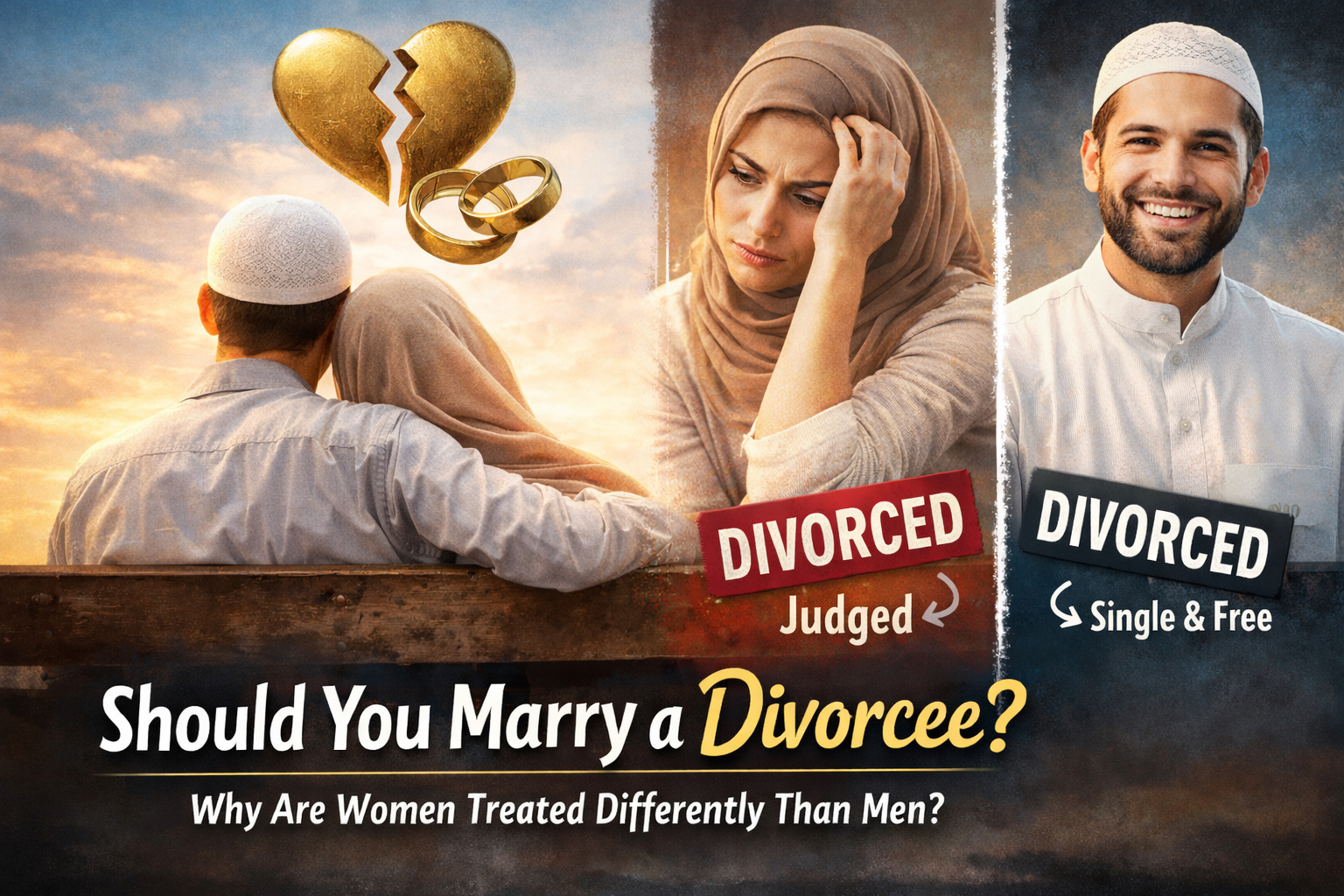
The Double Standard at the Aisle’s End
Divorce is a major life transition, not a moral verdict. Yet across many communities—in the UK and beyond—women often face harsher scrutiny than men after a marriage ends. Friends fall silent, potential in-laws grow cautious, and whispers travel faster than facts. Meanwhile, many men are greeted with a sympathetic shrug and encouraged to “start fresh.”
This double standard hurts everyone. It makes honest conversations about compatibility harder. It pushes people into secrecy instead of support. Furthermore, it obscures the real goal: strengthening marriages through wisdom, dignity, and accountability. In this piece, we explore why divorced women are treated differently to men, how faith-informed ethics challenge that imbalance, and what practical steps can restore fairness. We also highlight why marry a divorcee is a question that deserves a confident, positive answer.
A Brief History of a Bias
To understand the present, we must briefly look back. Historically, many societies tied a woman’s social value to marriageability, fertility, and family honour. Economic structures often limited women’s financial independence, turning marital status into a proxy for safety and social capital. Divorce, therefore, could unjustly signal “risk” for women, while men carried fewer penalties because their social worth was less entangled with marital status.
Even as laws and opportunities progressed, cultural scripts moved more slowly. Reputation economies still operate in tight-knit communities, where rumours weigh heavily and forgiveness is unevenly distributed. Consequently, divorced men are sometimes seen as “experienced” and “ready,” while divorced women are framed as “complicated” or “burdened”—labels that tell us more about inherited prejudice than about people.
Faith, Law, and Lived Reality: What Our Tradition Really Says
Islamic ethics are unambiguous about human dignity. The Qur’an and Prophetic teachings emphasise fairness, compassion, and the prohibition of slander. Divorce is permitted as a last resort, not a scarlet letter. Moreover, the tradition acknowledges that both men and women can initiate the end of a marriage and both retain honour and rights afterward.
Yet lived reality can drift from principle. Cultural habits—unverified gossip, one-sided blame, or inflated expectations—create an environment where women bear disproportionate stigma. This gap between ideals and practice is precisely where ethical, Shariah-informed community leadership is needed. When we align social behaviour with faith principles—due process, good opinion (husn al-dhann), and mercy—we dismantle bias and restore balance.
Data and Direction: What the Numbers Suggest
In the UK and North America, divorce among Muslims is rising, similar to wider society. Community estimates suggest roughly 42% of British Muslim marriages may end in divorce, with North American Muslim divorce rates exceeding 30%. Statistics alone do not tell the whole story, but they do tell us this: compassionate, practical responses are urgently needed.
Growing numbers of young professionals, reverts, and late-20s/30s singles report limited halal options and rising pressure. As a result, many delay marriage or accept matches without proper assessment, risking mismatch. Meanwhile, post-divorce stigma—especially for women—slows healthy re-entry into serious matchmaking. Addressing bias is not simply “nice to have”; it is central to strengthening the Ummah through wise, resilient marriages.
Economics, Time, and the Unequal Load
Bias is not only emotional; it is also structural. Women often carry more of the child-rearing load after divorce, which constrains time and flexibility. Prospective suitors may bring assumptions about “complexity,” even though parenting experience often signals maturity, reliability, and emotional literacy—qualities that enrich a marriage.
Furthermore, economic disparities can deepen bias. If women face wage gaps or career penalties due to caregiving, they may be judged by outdated measures that equate “financial independence” with “worthiness.” This is deeply unfair. Islam never equates dignity with earning power, and it encourages community mechanisms—charity, family support, ethical contracts—that ensure justice. Consequently, we should assess character, compatibility, and shared vision, not penalise people for structural inequalities.
Reputation, Rumours, and the Media Script Reputation is a fragile currency—especially online. In modern matchmaking ecosystems, a single unverified story can travel far. Divorced women frequently report “soft blacklisting” through whisper networks: “She’s too demanding,” “She left,” “There must be something.” These narratives are often incomplete, gendered, and sometimes false.
We must also recognise the influence of media. Popular culture still romanticises the bachelor’s second chance while problematising a woman’s. Films, dramas, and social feeds can subtly frame divorced men as adventurous and divorced women as suspect. Challenging these scripts requires community literacy: encouraging questions of fact over hearsay, and perspective over snap judgement.
Different Yardsticks: How Expectations are Split by Gender
Why do people measure men and women differently after divorce? Several overlapping dynamics drive the split:
- Age and fertility expectations: Women in their late 20s and 30s face unjust pressure regarding timelines. Yet marriage built on fear rarely thrives. Honest health conversations, realistic planning, and mutual support matter more than social deadlines.
- Safety narratives: Women often bear the brunt of navigating safety in online spaces. When a previous marriage ended due to abuse or serious mismatch, blame can be misplaced. Instead of suspicion, survivors deserve support and credible safeguarding tools.
- Emotional labour: Communities sometimes expect women to be more accommodating “next time,” while they frame men as “more mature now.” Both parties should learn and grow; neither should carry the entire burden of “fixing” relationships.
These asymmetries lead to skewed risk assessments. They also ignore a crucial insight: many divorced women have done the deep work of self-reflection, counselling, and boundary-setting. That experience can be a profound asset.
Why marry a divorcee: Strength, Clarity, and Compassion Why marry a divorcee? Because a person who has navigated heartbreak with integrity tends to value honesty, boundaries, and mercy. They often bring clarity about what builds trust and what breaks it. They know the difference between conflict and cruelty, and they have likely developed practical tools for communication and conflict resolution.
Furthermore, divorced candidates frequently value family life and commitment precisely because they have seen what happens when alignment is missing. They may approach finances with prudence, expectations with realism, and faith with renewed sincerity. For many, divorce can be a catalyst for growth—a season of learning that enriches future partnership. If you want steadiness, kindness, and emotional intelligence, do not overlook the divorcee.
Halal Courtship, Not Hearsay
Healthy, Shariah-compliant courtship is built on transparency, not myth. You can ask respectful questions about the previous marriage: What did you learn? What would you do differently? What safeguards matter to you now? In return, be ready to answer the same. This mutual accountability is not interrogation; it is maturity.
Therefore, the question is not simply “Why marry a divorcee?” but “Why would any thoughtful adult ignore the wisdom that life experience provides?” When both parties approach with fairness—and when families and guardians use discretion instead of gossip—matches become safer, kinder, and more intentional.
Faith-Informed Safeguards: From Principle to Practice Islam does not leave couples to navigate alone. It offers process, rights, responsibilities, and community support. In practice, this should include:
- Due diligence without defamation: Verify facts respectfully. Seek references with fairness, not fishing expeditions.
- Wali/guardian involvement that empowers, not controls: A good guardian listens, balances risks, and centres the seeker’s welfare.
- Education before enthusiasm: Pre‑marital learning on communication, conflict management, finances, and shared values is essential.
When we anchor courtship in these principles, we diminish bias. We also protect everyone—from naïve optimism, coercive control, and avoidable heartbreak. Crucially, these safeguards help divorced women and men alike to re-enter the search with dignity.
The Cost of Stigma: Community and Personal Consequences
Stigma is not harmless. It delays marriages that could have flourished. It drives singles towards unsafe platforms or silence. It increases loneliness and anxiety, and it can push people into matches shaped by fear rather than fit. In the long run, communities pay the price through unstable households and frayed trust.
On the other hand, when we welcome divorced candidates with respect, we signal our commitment to justice. We tell our daughters and sons that accountability, resilience, and mercy are valued. We turn “reputation management” into character building. This cultural shift strengthens the Ummah by making marriage both accessible and aspirational again.
Practical Steps for Families, Mosques, and Matchmakers To reduce the double standard, each layer of the community can act:
- Families: Ask balanced questions of both men and women. Set timelines by wisdom, not pressure. Encourage pre‑marital education equally.
- Mosques and community organisations: Offer impartial counselling and mediation. Normalise seminars on healthy divorce recovery and re‑marriage.
- Matchmaking services: Build systems that verify identity, enable safe chaperoned communication, and discourage misinformation.
Moreover, promoting the positive case—Why marry a divorcee—should be part of khutbahs, workshops, and youth programmes. When leaders model fairness, communities follow.
Safety, Dignity, and Technology: The MMS Approach
Modern challenges require modern tools aligned with faith. Muslim Marriage Services (MMS) is a Certified Social Enterprise built on Islamic principles, ethical innovation, and trust. We address today’s real risks—romance fraud and misrepresentation—while upholding dignity for every member.
- Verified identities: We verify every member through our strategic biometrics partner, Yoti, a Certified B Corporation and global leader in AI identity solutions. This protects users from deception and helps restore trust.
- Optional mahram monitoring: Our DynamIQ Guardian allows guardian involvement to the degree you choose, safeguarding against coercion and predatory behaviour while preserving autonomy.
- Secure profile sharing: ProfileShield enables you to share your profile safely, with optional guardian approval, reducing reputational harm and controlling who sees your details.
- Education and support: We provide pre‑ and post‑marital courses, coaching, and counselling so that users learn skills long before conflict escalates.
- Marriage Fund: We offer financial assistance for those unable to afford wedding costs, because money should not be the barrier to a halal, dignified union.
In this ecosystem, divorced women and men receive equal respect. Structures—not stereotypes—carry the weight of safety. As a result, serious candidates can meet, assess compatibility, and move forward with confidence.
Addressing the Muslim Marriage Crisis with Equity Delayed marriages, rising divorce rates, and limited halal networking options have created a crisis that affects young Muslims across the UK and North America. Professionals, reverts, and late‑20s/30s singles often feel stuck between tradition and technology. The solution is not to abandon principle but to apply it with intelligence.
When we remove stigma—especially for divorced women—we enlarge the pool of serious candidates and improve match quality. Better fits lead to healthier families. Healthier families strengthen the Ummah. This is not theoretical; it is a direct line from equity to flourishing.
From Stereotypes to Stories: Hearing Real Voices
Labels reduce people. Stories restore them. Many divorced women describe transformative journeys: seeking counselling, deepening their relationship with Allah, learning communication tools, and setting kinder but firmer boundaries. These are not liabilities; they are assets.
Listening matters. When we create spaces where divorced candidates can speak for themselves—without being cross-examined by rumour—we uncover strengths that do not show on a CV: resilience, patience, empathy, and faithfulness under pressure. Those qualities build homes.
Choosing with Clarity: A Checklist for Fair Assessment When you meet a divorced candidate, consider:
- Character: Do they demonstrate honesty, humility, and consistency?
- Learning: Can they articulate what they took from the past without bitterness or blame?
- Compatibility: Are your values, goals, and lifestyles aligned, including in-laws, finances, and faith practice?
- Safety: Are there transparent boundaries, with appropriate guardian or mentor support if desired?
Apply the same checklist to never-married candidates. Fairness is not preferential treatment; it is consistent treatment.
Language Matters: From “Stigma” to “Stewardship”
Words shape worlds. Instead of labelling a person as “divorced” as if it defines their identity, treat divorce as a past event, not a permanent label. Shift from “she has baggage” to “she has experience and insights.” Replace “second-hand” imagery with “second chance,” but even better, “new chapter.”
In Islamic ethics, we can choose vocabulary that honours dignity. Consequently, community conversations become gentler and more constructive. A single phrase, repeated across a network, can cool a rumour or fan it. Choose to cool.
When Guardians Empower
Guardians and elders can be the difference between bias and balance. Empowerment looks like:
- Advocating for due process: “Let’s meet and hear her story,” instead of passing along whispers.
- Ensuring safety: Encouraging tools like identity verification, secure messaging, and optional chaperoning.
- Modelling mercy: Affirming that a person is not the sum of their hardest day.
Guardians can help both parties ask wise questions and set realistic expectations. Their role is pastoral and protective, not punitive.
Conclusion: Mercy Is the Metric
Ultimately, the measure of a community’s strength is how it treats those navigating life’s hardest seasons. If divorced women face automatic suspicion while men receive automatic grace, we fail the metric of mercy. The solution is neither naïveté nor cynicism; it is principled fairness, safeguarded process, and sincere education.
So ask again: Why marry a divorcee? Because wisdom is attractive. Because resilience is beautiful. Because communities flourish when they refuse to waste hard-won lessons. And because, in our faith, dignity is not a gendered privilege—it is a God-given right.
At MMS, we are committed to translating these values into practice—verifying identities, enabling ethical guardianship, educating couples, and lowering financial barriers. We believe in a future where divorced women and men find justice and joy in re‑marriage, where truth outpaces gossip, and where the best story is not the first marriage, but the right one.