Marriage in Islam (Nikkah) is described as half of one’s faith—a sacred sanctuary built upon mutual tranquility (sakinah), deep affection (mawaddah), and tender mercy (rahmah). Yet across the United Kingdom today, prospective couples and newlyweds are finding it harder than ever to build and sustain stable, lasting marital homes.
While popular community discussions often focus on surface-level issues—such as changing partner preferences, delayed marriage ages, or unrealistic personal standards—the underlying reality is far more complex. Modern British Muslim marriages are navigating a perfect storm of structural economic inequities, severe housing pressures, systemic healthcare barriers, and deeply ingrained mental health taboos.
This comprehensive guide breaks down the true state of Muslim marriage in the UK today. By examining the facts and figures behind our external socioeconomic hurdles and internal emotional struggles, we can outline a clear, realistic path toward building resilient, healthy, and faith-aligned unions.
Part 1: The External Pressures — Money, Housing, and Socioeconomic Realities
When a young man and woman decide to pursue marriage, they do not do so in a vacuum. They enter a socio-economic landscape that presents massive structural barriers—particularly for young British Muslims attempting to establish financial independence.
1. The Wealth, Income, and Employment Disparity
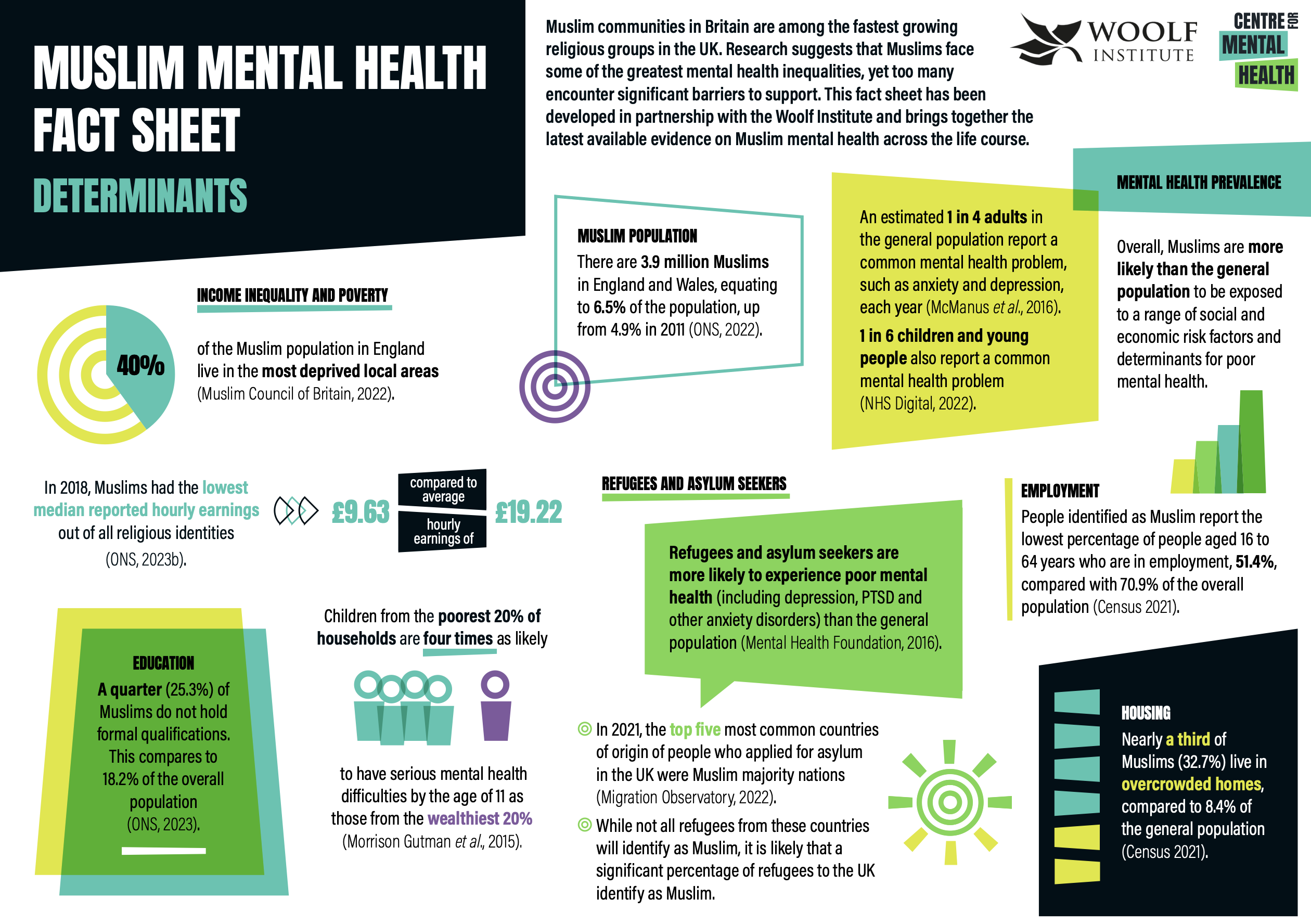
Financial stability is one of the foundational prerequisites for establishing an independent household. However, official government census data and economic research reveal a stark disparity between British Muslims and the wider population across every major economic metric.
Socioeconomic Comparison: UK Muslim Population vs. Wider UK Population
| Economic & Social Metric | UK Muslim Population | Wider UK General Population |
|---|---|---|
| Living in Lowest 40% Deprived Areas | 61.0% | 40.0% |
| Working-Age (16–64) Employment Rate | 51.4% | 70.9% |
| Full-Time Students (Ages 16–24) | 30.0% | 14.0% |
| Economic Inactivity Due to Caring Roles | 16.1% | 5.7% |
| Living in Most Deprived Local Areas | 40.0% (Lowest decile) | 10.0% (National baseline) |
| Median Hourly Wage | £9.63 per hour | £19.22 per hour |
These economic figures demonstrate that young Muslims face a severe financial penalty long before they step foot into the marriage search. With a median wage that is roughly half the national average and four times the national rate of localized deprivation, everyday living expenses—from rent and utility bills to groceries and transport—create immediate, high-stakes pressure on prospective grooms and brides.
2. The Housing and Overcrowding Crisis
Housing is arguably the most significant physical barrier facing young couples today. The ability to establish a private, secure home is vital for early marital intimacy and stability, yet housing statistics paint a challenging picture.
Housing and Living Arrangement Disparities
| Housing Indicator | UK Muslim Population | Wider UK General Population |
|---|---|---|
| Social Rented Housing | 26.6% | 16.6% |
| Homeownership (Outright or Mortgaged) | 45.6% | 62.8% |
| Private Rented Housing | 27.8% | 20.6% |
| Overcrowded Accommodation Rates | 32.7% | 8.4% |
With nearly a third (32.7%) of Muslims living in overcrowded conditions compared to just 8.4% of the general population, high property prices and exorbitant rental costs mean many newlyweds are forced to begin their married lives living in crowded, multi-generational households.
While joint-family arrangements can offer warmth, cultural continuity, and financial relief, a chronic lack of physical privacy, personal space, and household independence quickly becomes a primary source of friction between new spouses, in-laws, and extended family members.
3. Societal Expectations vs. Economic Reality
Despite these documented economic hurdles, cultural expectations surrounding weddings remain excessively high.
- Unrealistic Mahr Demands: Mahr is a sacred Islamic right designed to provide financial security and honor to the bride. However, when families demand upfront sums or financial commitments that far exceed a prospective groom’s realistic earning capacity, it transforms a divine blessing into an insurmountable wall.
- Lavish Wedding Costs: Cultural pressures to host massive celebrations often force young people or their parents into high-interest debt and personal loans, depleting their life savings before the marriage even begins.
Action Plan: Overcoming External Pressures
To overcome these structural economic barriers, prospective couples and families must proactively adopt realistic financial strategies:
- Normalize Open Financial Discussions: Discuss financial goals, existing debts, income realities, spending habits, and budget expectations candidly and transparently before signing the Nikkah contract.
- Reframe Mahr Expectations: Align Mahr with real, actual financial capabilities rather than community status, social comparison, or competition. Following the Sunnah means prioritizing ease, barakah, and mutual blessing over material display.
- Establish Living Boundaries Early: If living in a joint-family setup is economically necessary, establish explicit, upfront agreements regarding private living spaces, personal boundaries, household responsibilities, and financial contributions.
Part 2: The Internal Pressures — Mental Health, Stigma, and Emotional Readiness
While external economic realities build pressure from the outside, unaddressed mental health challenges and unresolved emotional distress destroy relationships from the inside.
1. Systemic Healthcare Barriers and Disparities
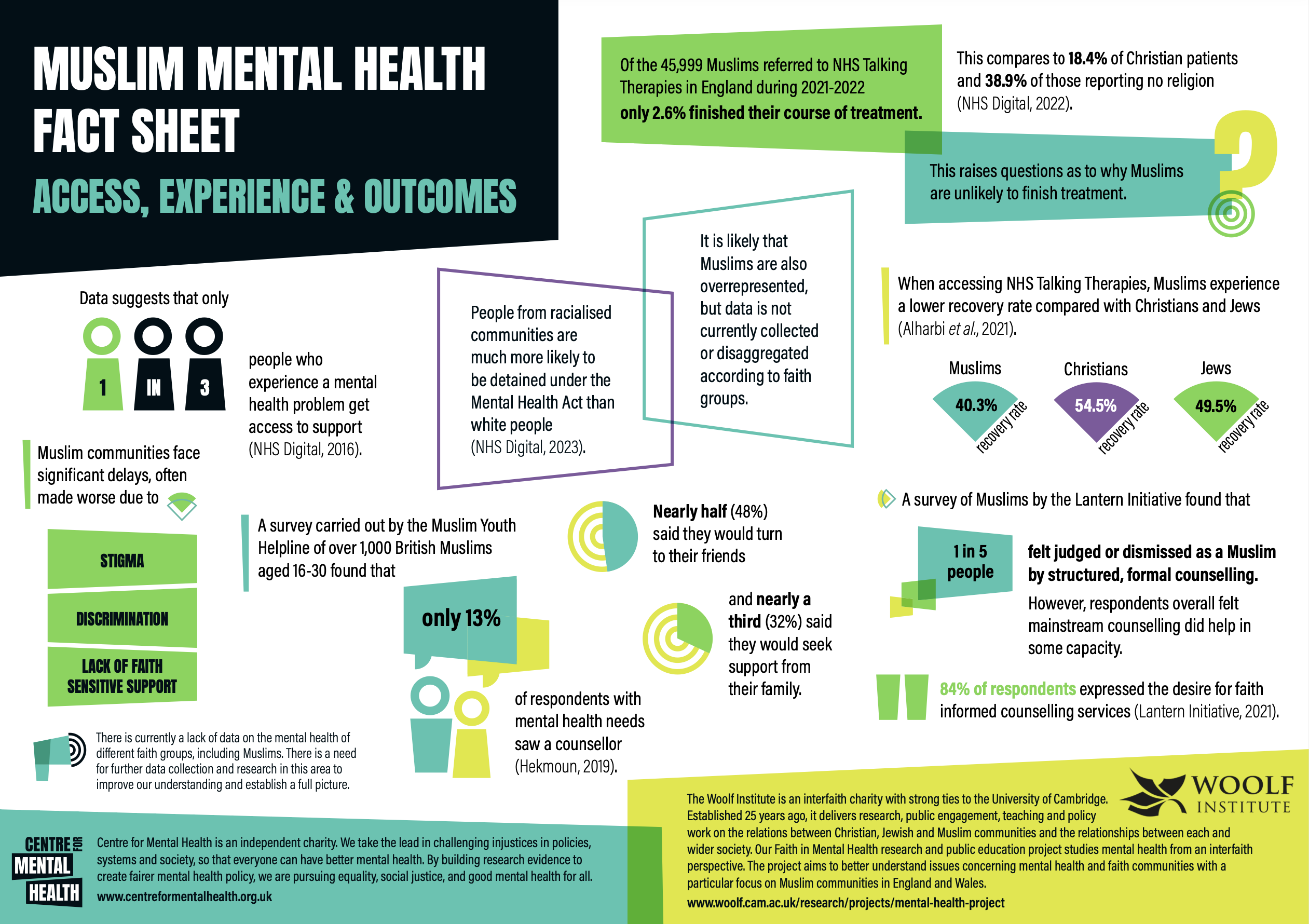
British Muslims face distinct mental health inequalities rooted in socioeconomic precarity, discrimination, and community isolation. However, when individuals attempt to seek professional help through mainstream healthcare systems, they encounter severe structural barriers.
NHS Mental Health Care & Experience Metrics (Muslim Patients)
| Healthcare & Therapy Metric | Statistical Percentage / Ratio |
|---|---|
| NHS Talking Therapies Treatment Completion Rate | 2.6% of referred Muslims complete treatment |
| Expressed Desire for Faith-Informed Counselling | 84.0% of surveyed British Muslims |
| Reported Feeling Judged or Dismissed in Therapy | 20.0% (1 in 5 patients) during formal counselling |
| Felt Faith/Religiosity Was Ignored or Misunderstood | 44.0% of Muslim therapy clients |
These numbers highlight an alarming reality: mainstream psychological services frequently fail to provide culturally safe or religiously sensitive care. When only 2.6% of referred Muslims complete their course of therapy, and 1 in 5 feel judged or dismissed due to their faith, mental health conditions go untreated, worsening over time and bleeding directly into marital relationships.
2. The Myth of the “Fix-It” Marriage
A widespread and dangerous cultural misassumption is that marriage will automatically “fix” an individual’s personal struggles, emotional instability, lack of discipline, or underlying trauma.
Marriage provides companionship, security, and love—but it is not a clinical treatment program. Entering a partnership with unaddressed emotional wounds places an unfair and destructive burden on a spouse, leading to predictably severe relational outcomes:
- Chronic Communication Breakdown: Unresolved past trauma causes individuals to react to normal marital disagreements with extreme defensiveness, aggression, or complete emotional stonewalling.
- Erosion of Emotional Intimacy: Untreated depression and chronic anxiety severely restrict an individual’s capacity for empathy, emotional presence, affection, and vulnerability.
- Escalated Household Conflict: Without emotional self-regulation, minor daily stresses turn into volatile, ongoing arguments that tear the domestic environment apart.
3. Breaking the Stigma Around Therapy
In many traditional households, seeking mental health support is still incorrectly viewed as a lack of faith (Iman), a spiritual failure, or a shameful personal weakness.
However, seeking professional psychological assistance aligns directly with core Islamic principles. The Prophet Muhammad (peace be upon him) explicitly instructed believers to seek remedies for their ailments, reminding us that Allah has created a cure for every disease. Professional counselling and psychotherapy are practical, evidence-based tools designed to foster emotional maturity, self-awareness, and relational health.
Action Plan: Prioritizing Emotional Health Before Marriage
- Normalize Pre-Marital Counselling: Engaging in structured pre-marital counselling helps prospective spouses evaluate compatibility, learn evidence-based conflict resolution, and build communication habits before big life stressors hit.
- Dismantle the Help-Seeking Taboo: Reframe therapy and emotional self-reflection as proactive investments in personal growth and religious responsibility, rather than measures of last resort.
- Seek Faith-Sensitive Practitioners: Utilize qualified therapists and counsellors who understand psychological principles alongside Islamic values, ensuring care is spiritually uplifting and culturally safe.
Strategic Comparison: External vs. Internal Pressures
To understand how these pressures interact, we must look at how external economic forces and internal emotional struggles combine to threaten marital longevity:
| Dimension | External Pressures (Part 1) | Internal Pressures (Part 2) |
|---|---|---|
| Primary Root Causes | Deprivation (40%), low wages (£9.63/hr), overcrowding (32.7%), high wedding costs. | Healthcare barriers (2.6% completion rate), cultural stigma, untreated trauma, lack of faith-informed care. |
| Primary Solutions | Transparent budgeting, modest Mahr, clear housing boundaries, financial planning. | Professional therapy, emotional self-regulation, pre-marital screening, open emotional dialogue. |
| Impact on the Marriage | Financial anxiety, lack of physical privacy, stress over joint-family boundaries, immediate financial strain. | Communication breakdown, emotional withdrawal, volatile conflict, inability to connect intimately. |
| Key Mindset Shift Needed | Move away from societal competition, lavish displays, and unrealistic financial demands. | Normalising pre-marital counselling, breaking mental health taboos, and seeking faith-sensitive care. |
Frequently Asked Questions
Why are financial discussions before the Nikkah so critical?
Financial disagreements are universally recognized as one of the primary drivers of divorce. Having open, transparent conversations before marriage regarding income, existing debts, spending habits, savings goals, and household contribution expectations prevents painful surprises and builds foundation trust.
Is pre-marital counselling permissible and recommended in Islam?
Yes, absolutely. Seeking guidance (Shura) and consulting experts in matters of family and personal wellbeing is deeply embedded in Islamic tradition. Pre-marital counselling gives couples objective tools to assess psychological compatibility, discuss boundaries, and learn healthy conflict resolution.
How can British Muslims find faith-sensitive mental health support?
Look for registered therapists who specialise in culturally competent and faith-informed care. Organisations such as the Muslim Counsellor and Psychotherapist Network (MCAPN), Inspirited Minds, and Muslim Women’s Network UK offer tailored directories and services that respect Islamic beliefs while maintaining high clinical standards.
Building Resilient Islamic Marriages for the Future
The financial, structural, and emotional challenges facing British Muslim marriages today are real and substantial, but they are far from insurmountable. By acknowledging external economic realities, dismantling mental health taboos, setting realistic expectations, and prioritizing emotional readiness, couples can build homes grounded in genuine sakinah, empathy, and long-term stability.
At Muslim Marriage Services (MMS), we are dedicated to helping our community navigate these complexities. We advocate for a matchmaking process rooted in Islamic principles, financial transparency, emotional readiness, and genuine compatibility.
Start your journey toward a healthy, resilient Islamic marriage today. Visit Muslimmarriage.global to find a partner who aligns with your core values, your faith, and your vision for the future.
Ameen.
Feeling the weight of these external pressures? Read our comprehensive guide on Muslim Marriage and Mental Health: A Complete Guide to Emotional Wellbeing for practical steps on protecting your relationship.