

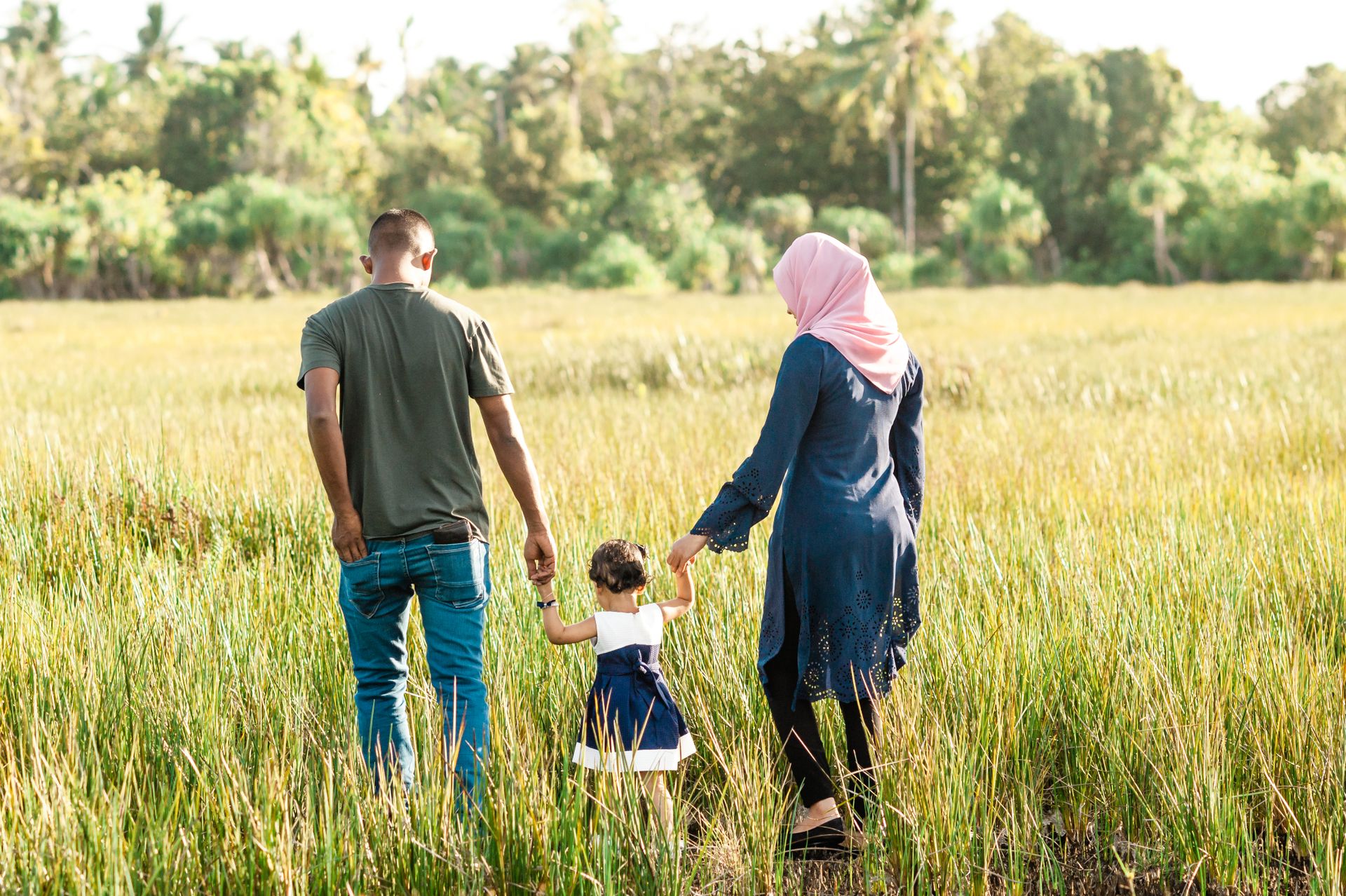
The question of whether Muslims can adopt is one of the most frequent queries raised by individuals and couples exploring family planning. For those navigating fertility struggles or simply harbouring a deep desire to provide a loving home for a child in need, the drive to care for an orphan is immense. Within Islamic tradition, caring for an orphan (Yateem) is celebrated as one of the highest and most spiritually rewarding acts of worship. However, the framework governing child care in Islam differs fundamentally from the Western legal definition of adoption.
Understanding these distinctions is essential for any Muslim seeking to raise a non-biological child while remaining grounded in Islamic jurisprudence (Fiqh). To honour both the spiritual weight of orphan care and the legal boundaries outlined in the Qur’an and Sunnah, families must understand how lineage is preserved, how Kafalah operates, and how practical legal matters like inheritance and family modesty (Mahram status) are managed.
The Spiritual Virtue of Caring for Orphans (Yateem)
To understand the Islamic view on child guardianship, one must first recognise the elevated status Islam grants to those who care for vulnerable children. Pre-Islamic Arabian society often mistreated orphans, exploiting their property and denying them social standing. Islamic revelation radically transformed this culture, establishing strict protections for orphan welfare and property rights.
Prophet Muhammad ﷺ, who was himself an orphan, emphasised the extraordinary reward promised to those who take in a child. In a well-known narration, he held his index and middle fingers together and said:
“I and the person who looks after an orphan will be in Paradise together like this.”
This tradition underscores a foundational Islamic ethos: a community is judged by how it treats its most vulnerable members. Providing a child with shelter, nutrition, education, emotional security, and love is an act of ongoing charity (Sadaqah Jariyah) that carries eternal weight.
However, Islam pairs this high spiritual encouragement with precise legal parameters designed to protect the child’s identity, rights, and lineage.
Understanding the Core Principle: Preservation of Lineage (Nasab)
The fundamental difference between Western adoption and Islamic guardianship stems from the protection of lineage (Nasab). In Islamic law, Nasab is an inviolable right belonging to every child. A person’s biological lineage dictates legal rights, inheritance shares, marriage eligibility, and individual identity.
During the early period of Islam in Madinah, adoption was practiced much like it is in modern Western legal systems. A person could adopt a child, bestow their own surname upon them, and legally replace the child’s biological parentage. Prophet Muhammad ﷺ himself had adopted Zayd ibn Harithah, who was initially known as Zayd ibn Muhammad.
This practice was formally restructured with the revelation of Surah Al-Ahzab in the Qur’an:
“Call them by [the names of] their fathers; it is more just in the sight of Allah. But if you do not know their fathers – then they are your brothers in religion and your dependents.” (Qur’an 33:5)
Following this revelation, Zayd reverted to being called Zayd ibn Harithah. The verse established a permanent boundary: while a Muslim may raise, love, and care for a child with complete parental dedication, they cannot legally or symbolically erase or alter the child’s true biological identity.
Western Adoption vs. Islamic Kafalah
To navigate adoption as a Muslim, one must distinguish clearly between conventional Western legal adoption and the Islamic system of Kafalah.
Conventional Western Adoption In Western legal frameworks, adoption is a legal process that completely transfers parentage from the biological parents to the adoptive parents. Key characteristics include:
- Name Change: The child’s original surname is legally erased and replaced with the adoptive family’s surname.
- Severed Lineage: Biological parental rights are permanently terminated, and the legal birth certificate is often amended or sealed.
- Automatic Inheritance: The child legally becomes a standard heir to the adoptive parents, forfeiting any legal claim to their biological parents’ estate.
The Islamic Model of Kafalah Islam replaces full legal replacement with Kafalah, which translates roughly to legal guardianship, sponsorship, or custody. Under Kafalah, a guardian takes full responsibility for the physical, emotional, educational, and spiritual well-being of the child without altering their legal identity. Key principles include:
- Preserving the Family Name: The child retains their biological surname and lineage. If the biological father’s name is unknown, the child is given a general naming convention rather than the guardian’s family surname.
- Transparency and Truth: The child is never lied to regarding their origins. Knowing one’s biological background is viewed as a fundamental human right.
- Protection of Personal Assets: Any wealth, property, or inheritance that belongs to the child from their biological family must be kept separate and protected by the guardian until the child reaches maturity.
Navigating Practical Jurisprudence (Fiqh) in Kafalah
Because Kafalah does not establish a biological relationship, guardians must navigate two primary practical matters: inheritance laws and household boundaries (Mahram status).
- Managing Inheritance Rights Under standard Islamic inheritance rules (Mawarith), estate distribution is strictly defined based on biological ties. Because a child under Kafalah is not legally a biological child, they do not automatically inherit a prescribed fixed share of the guardian’s estate upon death.
To ensure the child is thoroughly cared for financially, Islamic jurisprudence provides two clear legal mechanisms:
- Wasiyyah (Bequeathal in a Will): Islamic law permits an individual to designate up to one-third (1/3) of their total estate to anyone who is not an automatic biological heir. Guardians can explicitly designate this portion to their raised child in a legally binding will.
- Hibah (Lifetime Gifts): A guardian has complete freedom during their lifetime to gift financial assets, property, or money to the child. Gifts transferred during the guardian’s life become the absolute property of the child and are not subject to post-death estate division.
- Establishing Mahram Status via Milk Kinship (Rada’ah) In Islamic law, a Mahram is an unmarriageable relative with whom everyday family interactions—such as removing the hijab within the home or being alone together—are permissible. Simply raising a child through Kafalah does not automatically make the child a Mahram to the guardians or their biological children once the child reaches puberty.
However, Islamic jurisprudence provides a natural mechanism to resolve this: Milk Kinship (Rada’ah).
- The Two-Year Window: If an infant is breastfed by the adoptive mother (or an immediate female relative, such as the mother’s sister or sister-in-law) within the child’s first two lunar years of life, a permanent milk relationship is established.
- Legal Impact: Under Islamic law, milk relationship creates the exact same Mahram boundaries as biological lineage for privacy and marriage rules. The child becomes a foster-child to the mother, a foster-niece/nephew to her siblings, and a foster-sibling to her other children.
- Modern Applications: Medical advancements today allow non-gestational mothers to induce lactation through medical protocols under doctor supervision. This allows adoptive mothers to nurse infants and establish Rada’ah directly.
Social, Emotional, and Community Dimensions
Beyond the legal rules, raising a child through Kafalah requires emotional maturity and thoughtful planning.
Addressing Stigma and Myths In some cultural communities, misconceptions persist that adoption is “forbidden” (Haraam) in Islam. This stems from a misunderstanding of the Qur’anic prohibition. Islam did not ban caring for orphans; it banned the erasure of biological identity. Educating extended family and community members about the clear distinction between Kafalah and pre-Islamic adoption helps build a supportive network for the child.
Transparency with the Child Psychological research and Islamic ethics strongly agree on the importance of transparency. Children raised under Kafalah should be aware of their story in an age-appropriate manner from early childhood. Framing their background through the lens of love, honesty, and divine decree prevents identity crises later in life and honours the Qur’anic mandate for truthfulness.
Kafalah as an Essential Discussion for Couples
Integrating Kafalah into family planning is a significant journey that requires complete alignment between spouses. For couples navigating fertility struggles, or those seeking to expand their family through service to the community, Kafalah offers a deeply fulfilling path.
Key conversations for prospective spouses include:
- Shared Intentions: Aligning on the spiritual and emotional motivations for pursuing Kafalah.
- Financial Planning: Structuring estate wills (Wasiyyah) and lifetime gifts (Hibah) early to guarantee the child’s long-term financial security.
- Practical Logistics: Discussing medical options for lactation induction (Rada’ah) if bringing an infant into the home, or planning privacy arrangements if taking in an older child.
By approaching Kafalah with legal clarity, emotional openness, and spiritual dedication, Muslim families can fulfil a noble prophetic tradition while providing vulnerable children with the loving, secure homes they deserve.
How do you view the role of Kafalah in modern family planning? Share your thoughts and experiences in the comments below!