
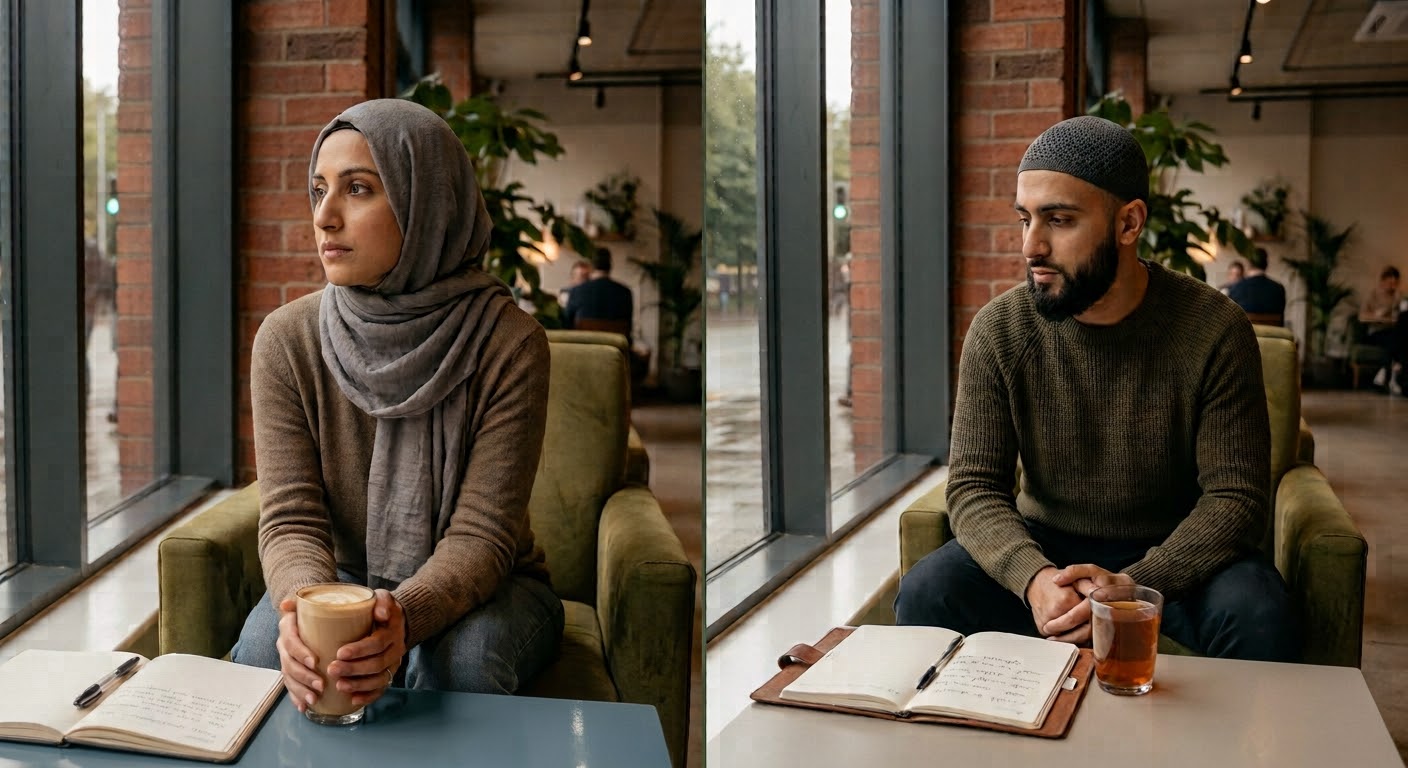
Before searching for the one, ask yourself a more important question: Are you ready to be someone’s life partner?
Salaams.
Marriage is one of the biggest decisions you can make. It can bring companionship, love, family, stability and a deeper connection to your faith.
But wanting marriage and being ready for marriage are two very different things.
You can desperately want to get married and still have work to do before you are ready to share your life with another person.
In Islam, marriage is not simply about finding someone who makes you happy. It involves rights, responsibilities, patience, mercy, honesty, financial obligations, emotional maturity and a willingness to grow together.
We often hear people asking:
“Where is my life partner?”
Perhaps the more important question is:
“Am I ready to be the life partner someone else needs?”
That question requires honesty.
Being ready does not mean being perfect. Nobody enters marriage without weaknesses, fears or areas where they need to grow.
It means having enough self-awareness and maturity to recognise those areas — and being willing to work on them.
Here are ten signs that you may need more preparation before entering marriage.
1. You Expect Marriage to Fix You
Marriage cannot repair everything that is already broken inside you.
A loving partner can support you. They can encourage you, listen to you and stand beside you through difficult periods.
But they cannot become your therapist, rescuer, parent, emotional punching bag and personal problem-solver all at once.
If you are expecting marriage to remove your loneliness, give you purpose, solve your insecurity or make you feel valuable, you may be placing an enormous burden on someone you have not even met yet.
Marriage can be supportive and healing, but it is not a magic solution.
Ask yourself:
- Am I comfortable with who I am?
- Do I understand my own weaknesses?
- Can I take responsibility when something goes wrong?
- Am I dealing with unresolved emotional issues?
- Am I expecting another person to provide my entire sense of happiness?
Your future partner deserves a person who is working on themselves, not someone expecting marriage to do the work for them.
2. You Refuse to Compromise
Marriage involves two people.
That sounds obvious, but it becomes much harder when your preferences meet someone else’s.
You may have strong views about where you live, how money is managed, relationships with in-laws, holidays, children, work, household responsibilities or how much time you spend with family.
Some matters are principles.
Others are preferences.
Knowing the difference is essential.
Compromise does not mean abandoning your values or accepting something that violates your rights or beliefs. It means understanding that another person has legitimate needs, preferences and expectations too.
A marriage where one person always has to win eventually becomes exhausting.
Ask yourself:
Can I listen without immediately trying to get my own way?
Can I reconsider my position when there is a reasonable argument?
Can I make sacrifices for the benefit of the marriage?
Patience and flexibility are not weaknesses.
They are part of learning how to live with another human being.
3. You Are Only Looking for the Right Person
It is easy to create a list of what you want in a future partner.
Educated.
Attractive.
Successful.
Religious.
Kind.
Financially secure.
Good family.
Good personality.
Similar interests.
There is nothing wrong with knowing what matters to you.
But there is another question you need to ask:
Are you becoming the right person for the kind of marriage you want?
If you want someone emotionally mature, are you emotionally mature?
If you want honesty, are you completely honest?
If you want someone financially responsible, are you responsible with money?
If you want patience, are you patient?
If you want someone who communicates well, can you have difficult conversations without shutting down?
It is easy to evaluate everyone else.
Self-evaluation is harder.
Marriage preparation should therefore involve looking in the mirror as well as looking at potential partners.
4. You Expect a Perfect Marriage
Social media can create some very unrealistic expectations.
Couples post holidays, anniversaries, romantic photographs and carefully selected moments.
You rarely see the disagreement about the household bills.
You don’t see the difficult conversation about children.
You don’t see the exhaustion after a long day.
You don’t see the conversations about family boundaries.
You certainly don’t see every disagreement.
Marriage is not a permanent honeymoon.
There will be ordinary days.
There may be financial pressures, health problems, family difficulties, disagreements and periods when one partner needs more support than the other.
That does not mean the marriage is failing.
It means two human beings are building a life together.
A healthy expectation is not:
“We will never have problems.”
It is:
“When problems come, we will deal with them with respect, honesty and patience.”
That is a much more realistic foundation.
5. You Avoid Difficult Conversations
Some conversations are uncomfortable before marriage but become considerably more complicated after Nikah.
Money.
Children.
Living arrangements.
Work.
Family involvement.
Relocation.
Religious practice.
Household responsibilities.
Personal boundaries.
Previous marriages.
Expectations around privacy.
These are not minor details.
They can affect the entire direction of a marriage.
If you avoid difficult conversations because you are afraid they might ruin the relationship, you may be protecting the relationship in the short term while creating problems for the future.
A potential partner should be able to discuss serious matters respectfully.
You do not need to agree on everything.
But you should be able to talk about important differences before making a lifelong commitment.
Silence is not compatibility.
Sometimes it simply means an important conversation has not happened yet.
6. You Ignore the Responsibilities of Marriage
Marriage brings rights and responsibilities for both partners.
It is not simply:
“I want someone who loves me.”
It is also:
“What responsibilities am I prepared to carry?”
Marriage may require financial responsibility, emotional support, practical cooperation, family responsibilities, patience and consideration.
Different couples will divide responsibilities differently, but pretending that responsibilities do not exist will not make them disappear.
Before marriage, ask yourself:
- Am I financially responsible?
- Can I manage my commitments?
- Do I understand the responsibilities associated with marriage?
- Am I willing to support my partner during difficult periods?
- Can I contribute to running a household?
- Do I understand the rights and responsibilities that come with Nikah?
You should also understand your own rights rather than relying on assumptions or what you have seen other couples do.
A strong marriage is not built on vague expectations.
It is built on clarity.
7. You Disrespect People During Conflict
One of the most revealing things about a person is how they behave when they are angry.
Anyone can appear pleasant when everything is going their way.
The real test often comes when something goes wrong.
Do you shout?
Insult people?
Threaten them?
Manipulate them?
Give prolonged silent treatment?
Bring up every past mistake?
Refuse to apologise?
Turn every disagreement into a competition?
Or can you disagree without destroying the other person’s dignity?
These patterns rarely disappear simply because someone gets married.
In fact, marriage can expose them more clearly because two people are living closely together and dealing with pressure, responsibilities and disagreements.
Pay attention to how you treat people who cannot do anything for you.
How do you speak to your parents?
How do you treat colleagues?
How do you respond to customer service staff?
How do you behave when someone disagrees with you?
How do you react when you are told “no”?
Character is not demonstrated only when everything is comfortable.
It is revealed under pressure.
8. You Put Looks, Status or Money First
Attraction matters.
Financial stability matters.
Compatibility matters.
Ambition can matter.
But if appearance, status or wealth becomes the main measure of whether someone is suitable for marriage, you may overlook characteristics that become far more important over time.
Someone can be highly attractive and completely unsuitable for you.
Someone can have an impressive career but poor character.
Someone can have money but no sense of responsibility.
Someone can have social status but treat people badly.
Marriage requires looking beyond the surface.
Ask about deen.
Ask about character.
Ask about responsibility.
Ask about family expectations.
Ask about finances.
Ask about communication.
Ask about future plans.
Ask yourself whether you genuinely respect the person you are considering.
Physical attraction may open the door.
Character and compatibility help determine whether you can build a life together.
9. You Are Still Holding Onto the Past
Previous relationships, broken engagements, divorce or other difficult experiences can leave emotional scars.
That does not make someone unsuitable for marriage.
But unresolved issues can follow you into your next relationship.
If you are constantly comparing a potential partner with someone from your past, you may not be emotionally available for something new.
If you are still angry about what happened, you may need time to process it.
If you are still checking an ex-partner’s social media, hoping they will contact you or wondering whether they regret losing you, it may be a sign that the previous chapter has not properly closed.
Moving forward does not mean pretending the past never happened.
It means learning from it without allowing it to control your next marriage.
Ask yourself:
Am I choosing this person for who they are, or am I trying to replace, prove something to or get revenge on someone from my past?
Your future partner should not have to pay the emotional price for someone else’s mistakes.
10. You Put Everything Before Allah
Marriage can become an enormous focus.
Finding someone.
Getting engaged.
Planning the Nikah.
Organising the wedding.
Finding somewhere to live.
Building a family.
All of these things can consume your attention.
But marriage should not become the centre of your entire existence.
Your relationship with Allah comes first.
That means asking whether your approach to marriage is actually consistent with your faith.
Are you making decisions based purely on appearance, wealth or social pressure?
Are you prepared to respect the rights and responsibilities of marriage?
Are you seeking a marriage that helps you grow in faith and character?
Are you making dua while also taking sensible practical steps?
A strong marriage does not require two perfect people.
It requires two people who understand that they are accountable to something greater than themselves.
Being Ready Does Not Mean Being Perfect
This is important.
The purpose of this list is not to suggest that you must become some flawless version of yourself before you can consider marriage.
Nobody is perfect.
You will continue learning throughout your marriage.
The real question is whether you have enough self-awareness to recognise your weaknesses and enough maturity to work on them.
There is a major difference between:
“I have things to work on.”
and:
“I refuse to work on anything.”
The first is human.
The second can become a serious problem.
You do not need to have your entire life perfectly organised before considering marriage.
But you should be honest about where you are.
Ask Yourself the Questions You Would Ask a Potential Partner
Before asking whether someone else is good enough for you, turn the questions around.
Would you be comfortable if someone examined your character as carefully as you examine theirs?
If you expect financial responsibility from a future partner, are you financially responsible?
If you expect honesty, are you transparent?
If you want someone who communicates, can you communicate?
If you want someone who respects boundaries, do you respect theirs?
If you want someone patient, are you patient?
If you want someone committed to their faith, are you committed to yours?
This is not about lowering your standards.
It is about applying them consistently.
Marriage Is a Partnership, Not a Rescue Mission
One of the most dangerous expectations is believing that marriage will finally make everything feel right.
Your partner cannot be responsible for your entire emotional wellbeing.
They cannot give you a perfect life.
They cannot remove every insecurity.
They cannot guarantee that you will never feel lonely, frustrated or disappointed.
And you cannot do those things for them either.
A healthy marriage involves two people bringing their own strengths, weaknesses, experiences and responsibilities into the relationship.
You support each other.
You communicate.
You learn.
You apologise.
You adjust.
You grow.
And sometimes you simply get through a difficult day together.
That is real marriage.
Preparation Before Searching Can Save You Problems Later
There is nothing wrong with wanting marriage.
There is nothing wrong with actively looking for a suitable partner.
But preparation should happen alongside the search.
Learn about marriage.
Understand your rights and responsibilities.
Think carefully about your values.
Examine your expectations.
Discuss difficult subjects.
Understand your finances.
Think about family boundaries.
Be honest about your past.
Work on your communication.
And most importantly, be honest with yourself.
Because finding someone is only the beginning.
The bigger challenge is building a healthy marriage with them.
So, Are You Truly Ready?
Before asking:
“Where is my life partner?”
ask:
“Am I ready to be someone else’s life partner?”
Are you prepared to compromise without abandoning your principles?
Can you communicate when conversations become uncomfortable?
Can you handle disagreement without disrespect?
Can you take responsibility for your mistakes?
Can you discuss money, children, family and expectations openly?
Can you support another person without expecting them to fix you?
Can you accept that marriage will contain ordinary days as well as extraordinary ones?
And are you prepared to put your relationship with Allah at the centre of your life rather than treating marriage as the solution to everything else?
If the answer to some of these questions is “not yet”, that is not necessarily a reason to give up on marriage.
It may simply be a reason to prepare.
Because the goal is not to become perfect before marriage.
The goal is to become honest, responsible, emotionally mature and willing to grow.
Marriage Begins Before the Nikah
Your preparation for marriage begins long before the Nikah ceremony.
It begins with the choices you make now.
The habits you develop.
The way you treat people.
The way you handle conflict.
The way you manage money.
The way you practise your faith.
The way you communicate.
And the way you take responsibility for yourself.
So before you spend all your energy searching for the one, spend some time becoming someone who is ready for the one.
At Muslim Marriage Services, we believe a modern Muslim marriage service should be about more than simply introducing people.
We are building a Muslim Marriage Sanctuary where trust, transparency and digital security are central to the journey.
We are currently working towards our Founding 200.
Serious about marriage? Comment “Pioneer” or send me a DM to learn more.
Because finding the right person matters — but being ready for the right marriage matters too.