

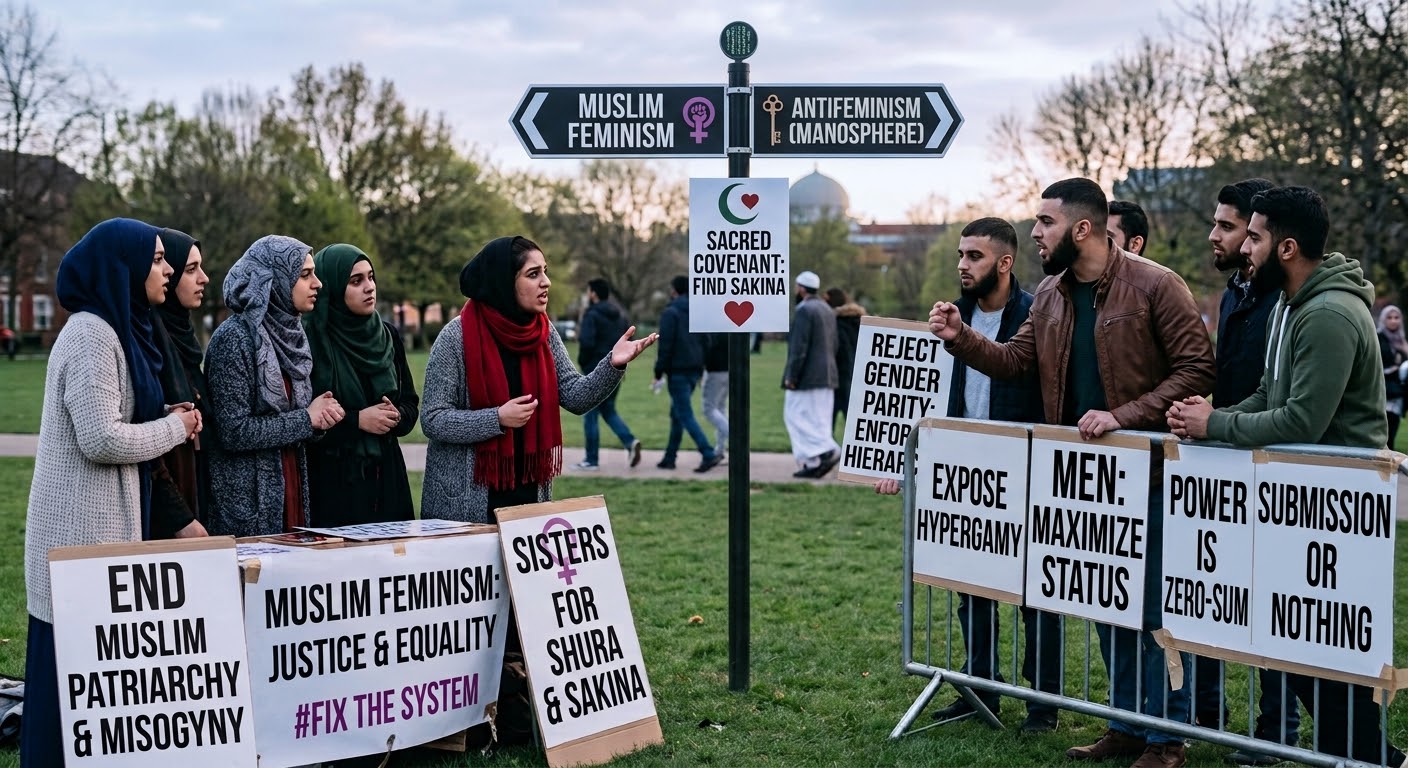
We are living in a time when many Muslims want to get married but struggle to trust anyone.
Speak to Muslim men and women in their twenties, thirties, forties or even older, and you will often hear the same thing: “I want to get married, but I just cannot trust anyone.”
Instead of seeing each other as potential life partners who can offer love, companionship and support, many men and women have started viewing the opposite gender as the enemy.
Marriage, which Allah (SWT) created as a source of peace and comfort, is increasingly treated like a business deal. Both sides arrive with their guard up, worrying about what they might lose, how they could be hurt and whether the other person is trying to take advantage of them.
Many Muslims remain single not because they do not want companionship, but because they are frightened of making the wrong choice. Marriage has become something to fear rather than something to look forward to.
So how did we reach a point where entering into Nikah can feel more like walking into a trap than beginning a life together?
The Two Extremes Causing Harm in Our Communities
Two opposing views have become increasingly common in online discussions about men, women and marriage: extreme forms of secular feminism and the so-called Red Pill movement.
Although they appear to be completely different, both can encourage distrust, resentment and hostility between men and women.
Instead of helping people build healthy marriages, these attitudes can make it harder for them to understand, respect and trust one another.
1. Modern Feminism and Growing Resentment
Some forms of modern secular feminism portray men as naturally controlling or oppressive and marriage as a threat to women’s independence.
Within this way of thinking, a husband’s responsibilities towards his family can be viewed as an attempt to control his wife rather than an opportunity to care for and support her.
Islam recognises the responsibilities of men through the concept of Qawwamah. However, this responsibility must be understood alongside justice, kindness, accountability and respect. It should never be used to justify abuse or mistreatment.
When women are constantly told to expect the worst from men, even ordinary disagreements or differences in marital roles can become battles over power and control.
Women deserve dignity, safety and respect. But a marriage cannot flourish when either person enters it already convinced that the other is an enemy.
2. Red Pill Ideology and the Objectification of Women
On the other side, Red Pill content has attracted men who feel confused, frustrated or disappointed by modern relationships.
Some of this content encourages men to view women as selfish, manipulative or primarily interested in money and status. Women can be described as people who will use a man financially and leave him once they no longer need him.
Instead of seeing women as individuals with their own personalities, experiences and values, this way of thinking can reduce them to a list of traits to assess, rank or exploit.
Men have every right to consider compatibility, financial expectations, character and shared values before marriage. However, there is a difference between making sensible decisions and assuming that every woman is out to cause harm.
A man who approaches marriage believing that women cannot be trusted will struggle to build a relationship based on mutual respect.
The Same Problem at the Heart of Both Extremes
These two attitudes can create a vicious circle.
Men begin to believe that women are untrustworthy, while women begin to believe that men are controlling and dangerous. Each side becomes more suspicious of the other, and genuine opportunities for marriage are lost.
At the heart of the problem is the tendency to stop seeing people as human beings and start treating them as threats, possessions or financial liabilities.
Social media can make matters worse. Content that provokes anger often attracts attention, so people can spend hours watching videos that reinforce their worst fears about the opposite gender.
Over time, they may begin to carry these fears into real-life marriage meetings. A prospective spouse can end up being judged for the actions of someone they have never met.
We cannot build healthy Muslim marriages if we approach every potential spouse as though we are preparing for a battle.
The Real Consequences for Muslim Families
This is not simply an argument taking place online. These attitudes can have serious consequences for individuals, children and families.
1. Relationships Without Commitment
When people become frightened of marriage but still want companionship, some turn to relationships outside Islamic boundaries.
They may spend years together without a clear commitment, only for the relationship to end in heartbreak.
This can leave people emotionally hurt and make it even harder for them to trust someone in the future.
Islam offers a framework for building relationships through Nikah, with rights, responsibilities and a clear commitment to one another.
2. Women Left to Cope Alone
When marriages break down, some women are left to raise their children with little financial or emotional support from the children’s fathers.
This places enormous pressure on mothers and can leave children without the support they need from both parents.
Islam teaches men to take their responsibilities towards their wives and children seriously. True manhood is not about power, status or controlling others. It includes honesty, responsibility, good character and fulfilling one’s obligations.
At the same time, we must avoid assuming that every failed marriage has the same cause. Each situation deserves to be understood fairly, and both men and women must be held accountable for their own actions.
3. Children Caught in the Middle
Children can suffer when parents are constantly in conflict or when one parent is absent from their lives.
A lack of stability, affection and positive role models can affect their understanding of relationships as they grow older.
This does not mean that every child from a separated family will struggle, or that remaining in an abusive marriage is the answer. Sometimes separation is necessary.
However, when marriages do end, parents should do everything reasonably possible to protect their children’s wellbeing and continue fulfilling their responsibilities.
We need to stop treating marriage as a competition between men and women and start thinking about the families we want to build.
The Quranic Blueprint: Sakina, Mawaddah and Rahmah
Islam does not present marriage as a business merger or a struggle for power. The Quran describes a much more beautiful purpose for marriage.
In Surah Ar-Rum, verse 21, Allah (SWT) explains that He created spouses for us so that we may find tranquillity in one another, and placed between us affection and mercy.
Three important principles stand out.
1. Sakina: Peace and Tranquillity
Your spouse should be someone with whom you can find peace and comfort.
Home should be a place where you can share your worries, feel valued and find support, rather than somewhere you constantly have to defend yourself.
This does not mean that married couples will never disagree. Differences are normal. What matters is how they handle those differences.
If every conversation about marriage becomes an interrogation, an argument or a test of loyalty, it becomes difficult to create the peace that Islam encourages.
2. Mawaddah: Love Shown Through Actions
Love is more than simply saying that you care about someone.
It is shown through kindness, consideration, affection and the effort you make to support your spouse.
It means listening when they are upset, appreciating what they do, making compromises when appropriate and taking an interest in their happiness.
A healthy marriage is not built around asking, “What am I going to get out of this?” It also involves asking, “What can I contribute to our life together?”
Both spouses should feel that their efforts matter.
3. Rahmah: Mercy and Compassion
Nobody is perfect. We all make mistakes, have difficult days and sometimes fall short of what is expected of us.
Rahmah means treating one another with compassion, patience and understanding.
It does not mean accepting abuse, ignoring serious problems or allowing someone to take advantage of you. It means recognising the difference between ordinary human shortcomings and behaviour that causes genuine harm.
A strong marriage requires both people to take responsibility for their mistakes, learn from them and treat each other with care.
It is difficult to build a marriage based on peace, love and mercy when your expectations have been shaped entirely by angry social media content.
How Can We Return to a Healthier Islamic Approach to Marriage?
If we want stronger marriages and healthier families, we must be willing to change the way we think about one another.
Here are four practical steps we can take.
1. Be Careful About What You Watch Online
If your social media feed is full of people telling you that men are terrible, women are manipulative or marriage is a losing game, consider unfollowing them.
Ask yourself whether the content you consume is helping you become wiser and more prepared for marriage, or simply making you more suspicious and bitter.
It is important to learn about real risks, recognise warning signs and protect yourself. But constantly consuming content designed to provoke anger can leave you expecting the worst from everyone.
Choose knowledge that helps you make better decisions rather than content that teaches you to distrust an entire gender.
2. Stop Treating Marriage Meetings Like Job Interviews
When meeting a potential spouse, it is sensible to discuss finances, expectations, family responsibilities, children, religious values and long-term compatibility.
These are important conversations, and asking difficult questions is not wrong.
The problem arises when the process becomes hostile, with each person trying to expose the other’s weaknesses or gain the upper hand.
A marriage meeting should allow both people to assess whether they could build a life together, while maintaining Islamic boundaries, dignity and respect.
You can have clear standards without being rude. You can ask important questions without assuming the other person is lying.
Marriage is not about finding someone who passes every test. It is about finding someone with whom you can build a compatible, respectful and committed partnership.
3. Understand Your Responsibilities and Practise Taqwa
Muslim men must understand that Qawwamah comes with responsibilities. Providing for a family, offering emotional support, acting fairly and leading with humility are all important parts of fulfilling those responsibilities.
It is not a licence to control or mistreat a wife.
Muslim women also deserve to understand their rights and responsibilities within marriage. Mutual respect, kindness, cooperation and consideration can help create a home in which both spouses feel valued.
Neither spouse should use religion to demand privileges while avoiding their own obligations.
Ultimately, both men and women must remember that Allah (SWT) will hold them accountable for how they treat one another.
4. Put Your Trust in Allah, Not Internet Cynicism
Islam teaches us to approach marriage with faith, good judgement and a commitment to good character.
The Prophet Muhammad ﷺ showed kindness, affection and consideration towards his wives. His example reminds us that strength and responsibility are not incompatible with gentleness and love.
Marriage requires us to take sensible precautions, ask the right questions and consider compatibility carefully. Trusting Allah does not mean ignoring warning signs or rushing into a commitment.
It means doing our due diligence, making informed decisions, seeking guidance and then placing our trust in Allah rather than allowing fear to control every decision.
Men and women were not created to spend their lives fighting one another. They can work together to build marriages rooted in faith, mutual respect and shared responsibilities.
The gender wars promoted online are not a substitute for the guidance of the Quran and Sunnah.
Conclusion: Put Down Your Guard Without Abandoning Your Standards
It is time to stop treating marriage like a business negotiation in which both people are looking for ways to protect themselves from the other.
You should never ignore serious warning signs, compromise your dignity or enter a marriage without understanding your rights and responsibilities.
But there is a difference between being careful and being cynical.
Protect your standards, but do not allow bitterness to close your heart to every possibility of a good marriage. Assess people according to their individual character and behaviour rather than judging them through the opinions of online influencers.
A successful marriage requires honesty, accountability, patience, compassion and a willingness to work together.
At Muslim Marriage Services, we believe that marriage is a journey, not simply a transaction. Building a strong foundation means looking beyond initial attraction and financial considerations to examine character, compatibility, values, responsibilities and the kind of life two people want to build together.
Our communities need to move beyond the constant arguments about men versus women and return to the principles that help marriages flourish.
May Allah (SWT) heal the hearts of our brothers and sisters, remove bitterness from our communities, grant those seeking marriage righteous and loving spouses, and protect our families from division and harm.
Ameen.