
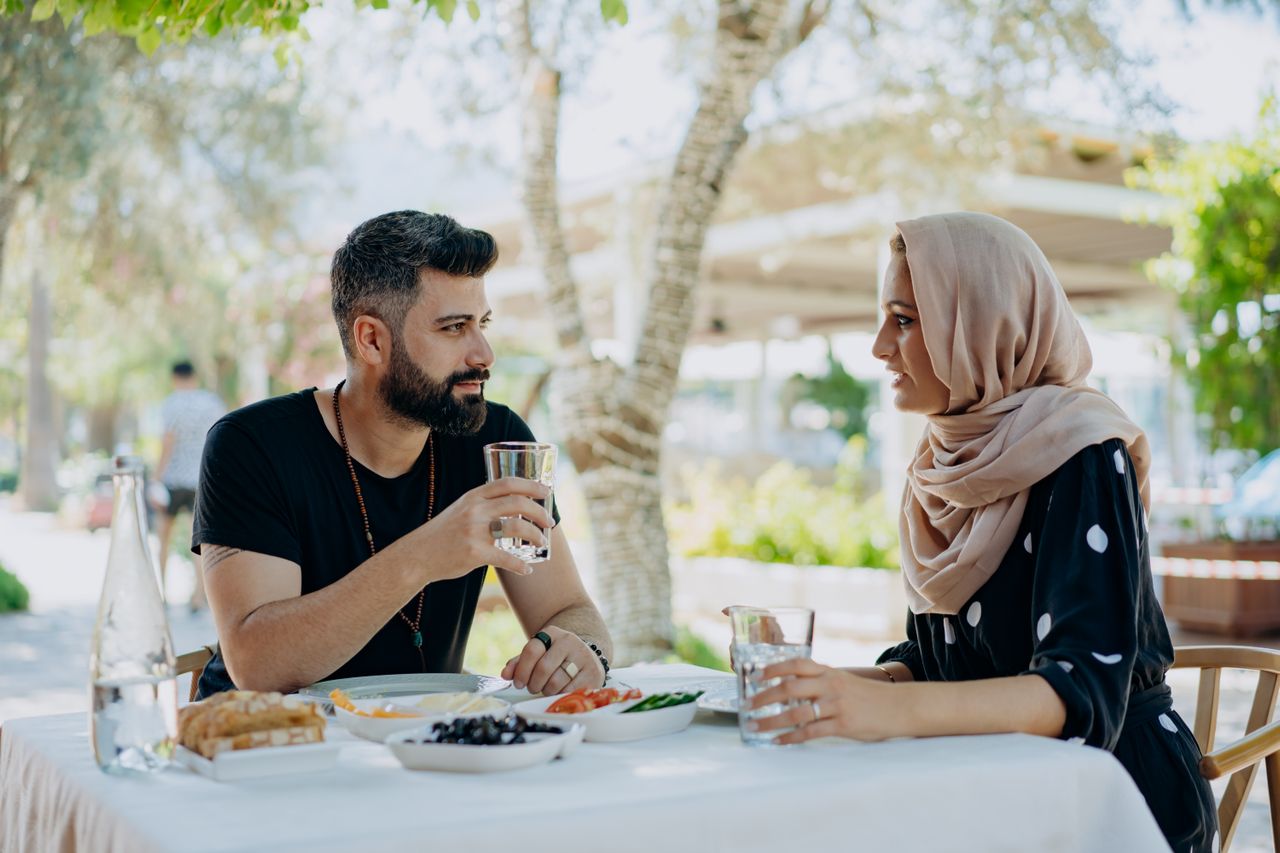
Marriage is about more than finding someone. It is about preparation, understanding, responsibility and building a life together.
What if preparing for Muslim marriage meant more than simply finding someone?
Salaams. Finding a suitable partner matters, but it is only the beginning. Marriage also involves honest conversations, informed decisions, mutual respect and an understanding of the responsibilities that come with building a life together.
There are important questions about faith, legal rights, health, children, finances, wellbeing and personal safety. Some may feel uncomfortable, but avoiding them does not make the issues disappear.
At Muslim Marriage Services (MMS), we believe these subjects deserve greater attention. Our approach looks beyond introductions and encourages a more responsible understanding of what preparing for Muslim marriage involves. As a certified social enterprise, we are building a Muslim Marriage Sanctuary centred on trust, digital security and Sharia compliance.
So, what should preparation for marriage include?
1. Legal and Spiritual Clarity
Marriage is both a spiritual commitment and a significant personal and legal decision. Understanding these aspects before getting married can help couples make informed choices.
Nikah contracts and civil registration
For Muslims, the Nikah is central to the marriage process. It represents a commitment made in accordance with Islamic principles, bringing responsibilities and rights for both spouses.
Couples should also understand the legal position of their marriage in the country where they live. In England and Wales, a religious Nikah does not automatically constitute a legally recognised civil marriage in every circumstance. The position depends on the circumstances and whether the relevant legal requirements have been met.
This matters because legal recognition can affect financial rights, property, inheritance and the options available if a marriage breaks down. Couples should not assume that a religious ceremony automatically provides the same legal protections as a civil marriage. They should understand the requirements and seek appropriate advice where necessary.
Marriage rights and responsibilities
Marriage brings responsibilities beyond the wedding day. Both spouses should understand their rights and obligations, including financial responsibilities, mutual respect, privacy and treating one another fairly.
Islam places considerable emphasis on justice, compassion, good character and fulfilling the rights of others. Yet people may enter marriage with different expectations about financial provision, employment, household duties or caring responsibilities.
Discussing these matters early can help couples understand each other and identify differences that need attention.
The role of a Wali
The role of the Wali is another important subject. A Wali may have a role in supporting the marriage process, particularly in relation to the bride, but requirements and interpretations differ across Islamic schools of thought and circumstances.
Discussions should focus on knowledge, responsibility, appropriate family involvement and the principles of justice and consent. Family participation should support a sound marriage process rather than create unnecessary pressure.
Spiritual commitment matters, but so does understanding what that commitment means in practice.
2. Health, Fertility and Family Planning
Health can be difficult to discuss before marriage. Some people feel embarrassed raising medical questions; others worry that honesty might discourage a potential partner. However, avoiding important conversations can create difficulties later, especially when decisions affect both spouses and their future family.
Fertility and expectations about children
For many Muslims, having children is an important part of their vision for marriage. Others may have different expectations or be uncertain about parenthood. These hopes should be discussed openly.
Relevant topics may include when to have children, desired family size, fertility difficulties and possible medical interventions. Fertility challenges can affect either partner, and no one should be reduced to their fertility status.
The purpose is not to demand guarantees about the future. It is to understand each other’s hopes, concerns and circumstances. Where appropriate, medical professionals can provide reliable information and explain available options.
Medical screening
Depending on individual circumstances, prospective spouses may wish to discuss relevant medical conditions, inherited conditions or other health matters that could affect their shared future. The appropriate screening will depend on personal circumstances and professional advice.
These discussions should be sensitive and respectful. People have a right to privacy, and health information should never be used to shame or unfairly judge someone. A responsible approach balances privacy with openness, compassion and informed decision-making.
Adoption and caring for children
Family planning may also involve adoption, fostering and caring for children who need a family. Muslim couples may wish to explore how these options relate to Islamic principles, local law and their own circumstances.
In Islamic discussions, kafala is an important concept involving a child’s care and upbringing while preserving the child’s identity and lineage. Its legal application differs from adoption arrangements in some countries. Anyone considering these options should understand the relevant legal requirements and seek appropriate religious guidance.
Couples should also discuss their expectations about parenting, family support and the practical responsibilities of raising children. These conversations can help establish whether they share a realistic understanding of family life.
3. Financial and Future Protection
Money can be a significant source of tension in marriage. Differences in income, spending habits, debt and lifestyle expectations can affect even otherwise compatible couples. Financial preparation is therefore an important part of responsible marriage planning.
Assets, income and financial expectations
Couples should discuss their general approach to money before marriage. This may include income, savings, debts, housing costs, employment and financial commitments to relatives.
One person may hope to buy a property soon after marriage, while the other prefers to rent and build savings. One may have substantial responsibilities towards parents or relatives, while the other has different commitments.
Neither situation automatically makes someone an unsuitable partner. What matters is whether both people understand the circumstances and can decide whether their expectations are compatible.
Financial transparency should not become an excuse to control another person’s money or demand unnecessary access to private accounts. The aim is to encourage informed decisions and realistic expectations about shared responsibilities.
Wills and inheritance
Planning for the future also means considering what might happen if a spouse dies. Wills, inheritance arrangements and the needs of dependants are often postponed because they seem uncomfortable or distant. However, appropriate planning can help protect loved ones and reduce uncertainty at a difficult time.
Muslim families may wish to ensure that estate planning takes account of Islamic inheritance principles alongside the laws of their country. These matters can be complex, particularly where there are children from previous relationships, property arrangements or assets in different countries. Professional legal advice can help clarify the options.
Lasting Powers of Attorney
In England and Wales, a Lasting Power of Attorney (LPA) allows a person to appoint someone they trust to make certain decisions on their behalf. There are different types covering property and financial affairs, and health and welfare.
Marriage does not automatically give a spouse authority to make every decision on the other person’s behalf. Understanding future-planning options can therefore be valuable. An LPA must be created in accordance with legal requirements, so professional guidance may be helpful.
Discussing these arrangements is not pessimistic. It recognises that responsible relationships involve caring for one another through changing circumstances.
Socioeconomic pressures
Housing costs, employment insecurity, childcare, the cost of living and caring responsibilities can all affect family life. Couples should discuss what they can reasonably afford, how they intend to manage household responsibilities and what they would do if circumstances changed.
A realistic plan is more useful than an idealised picture of married life. The aim is not to remove every uncertainty, but to approach the future with honesty and shared responsibility.
4. Wellbeing and Safety
A healthy marriage requires more than practical arrangements. It also depends on emotional wellbeing, personal safety, respect and the ability to communicate honestly. These subjects deserve attention before marriage, not only when difficulties arise.
Men’s mental health
Men can experience considerable pressure around marriage, financial provision, employment and family expectations. Some struggle to discuss loneliness, anxiety or depression because they fear being judged or seen as inadequate.
A responsible approach recognises that both men and women can experience emotional difficulties, and seeking support should not be treated as weakness.
Prospective spouses should consider how they communicate during difficult periods, respond to vulnerability and support one another without ridicule or judgement. A partner is not a substitute for professional help, and recognising when to seek support is important.
Creating an environment where people can speak honestly about wellbeing is part of building healthier relationships.
Online safeguarding and digital security
Online safety is directly relevant to modern marriage introductions. People may share personal details, photographs, contact information and sensitive family circumstances while exploring a potential match. Unfortunately, not everyone online has honest intentions.
Fake identities, impersonation, financial scams, harassment and misuse of personal information can create serious risks.
People should ask how a marriage service checks identities, handles personal information, identifies suspicious behaviour and responds to safeguarding concerns. They should also protect their own financial information, be cautious about requests for money and avoid sharing sensitive documents or intimate images unnecessarily.
No verification process can guarantee that every person is genuine or eliminate every risk. However, appropriate safeguards can help reduce foreseeable risks and support informed decisions.
At MMS, digital security is central to the approach we are building. Our model places emphasis on identity verification, fraud screening, safeguarding and responsible approval processes. People considering marriage deserve to know that their safety is being taken seriously.
Justice, dignity and Muslim women’s rights
A responsible discussion of marriage must address justice, dignity and the rights of Muslim women. Women should be able to understand their rights, make informed decisions and pursue their ambitions without unfair pressure to abandon them.
Marriage does not automatically mean giving up education, professional development or personal goals. Couples should discuss how their ambitions and responsibilities can be balanced while respecting both partners.
Topics may include employment, entrepreneurship, further study, childcare, household duties and financial independence. Some couples may choose for one partner to focus on paid work while the other takes on more caring responsibilities; others may divide these duties differently. What matters is that decisions are made through informed discussion and mutual respect, rather than assumptions or coercion.
Islamic principles of justice and good character should be reflected in how spouses treat one another. Abuse, intimidation and exploitation must not be excused or concealed under the label of family privacy. A Muslim Marriage Sanctuary should represent dignity, safety and responsible conduct for everyone.
5. Should Marriage Apps Be Regulated?
Online marriage services have changed how people meet prospective spouses. Digital platforms can connect people beyond their immediate family, community or geographical area, and make introductions more convenient for those with demanding schedules or limited opportunities to meet suitable partners.
However, their growth raises important questions about accountability, privacy, identity verification and safeguarding. What responsibilities should a platform have when people use it to make decisions about marriage? How should it deal with fraudulent accounts, harassment or misuse of personal information? What should happen when serious concerns are not addressed?
These questions deserve thoughtful consideration. Marriage services operate in different ways, and the risks can vary. However, platforms should communicate clearly about their safety measures and avoid making claims their processes cannot support.
There is a wider debate about whether existing laws and regulatory arrangements adequately address the risks associated with online introductions. Any response requires careful consideration of consumer protection, data protection, online safety and the responsibilities of service providers.
For users, the lesson is simple: do not judge a marriage platform solely by its size, popularity or number of profiles. Ask how it operates, what protections it offers and how it responds when something goes wrong. Trust should be supported by evidence, not marketing alone.
6. Why MMS Takes a Different Approach
These subjects may appear varied, but they are connected. Legal and spiritual clarity helps couples understand their commitments. Honest health and family-planning conversations encourage informed decisions. Financial preparation supports realistic expectations and future protection. Wellbeing and safeguarding promote respect and security. Understanding women’s rights, family responsibilities and the digital environment helps people approach marriage with greater awareness.
None of these discussions can guarantee a successful marriage. People change, circumstances develop and unexpected challenges arise. Nor should preparation become an interrogation or a checklist designed to find fault. It should be a process of mutual understanding, where both people can discuss important issues and make informed decisions.
This is the broader perspective MMS wants to encourage.
As a certified social enterprise, we are building a service that places trust, digital security and responsibility at the centre of its approach. Our developing model includes digital identity verification, fraud screening and safeguarding measures. Alongside these practical considerations, we want to encourage greater awareness of the real-world issues that shape Muslim married life.
We believe a marriage service should consider not only how people meet, but also the environment in which introductions take place and the information people need to make informed decisions.
Our vision is to build a Muslim Marriage Sanctuary centred on digital security and Sharia compliance, where responsible practice matters more than simply presenting large numbers. Trust must be earned through appropriate processes, clear communication and a willingness to take difficult questions seriously.
Conclusion: Finding Someone Is Only the Beginning
Preparing for Muslim marriage should involve more than choosing a partner and arranging a wedding. It should encourage honest conversations about faith, legal rights, health, children, finances, wellbeing, safety and the responsibilities of sharing a life.
Some conversations will be straightforward; others may be sensitive or uncomfortable. Approaching them with knowledge, compassion and mutual respect can help couples understand one another more clearly.
No relationship can be planned perfectly, and no marriage service can promise a particular outcome. However, people can take sensible steps to become better informed, recognise potential challenges and make decisions with greater confidence.
At MMS, we believe that is a conversation worth having.
We are not competing on numbers. We are competing on trust, security and responsibility.
We are building a Muslim Marriage Sanctuary that takes these principles seriously and encourages a more considered approach to finding a life partner.
Finding someone is only the beginning.
Preparing properly is the bigger conversation.
Follow MMS for a different approach to Muslim marriage, built around trust, digital security, Sharia compliance and responsible preparation.
Ameen.