
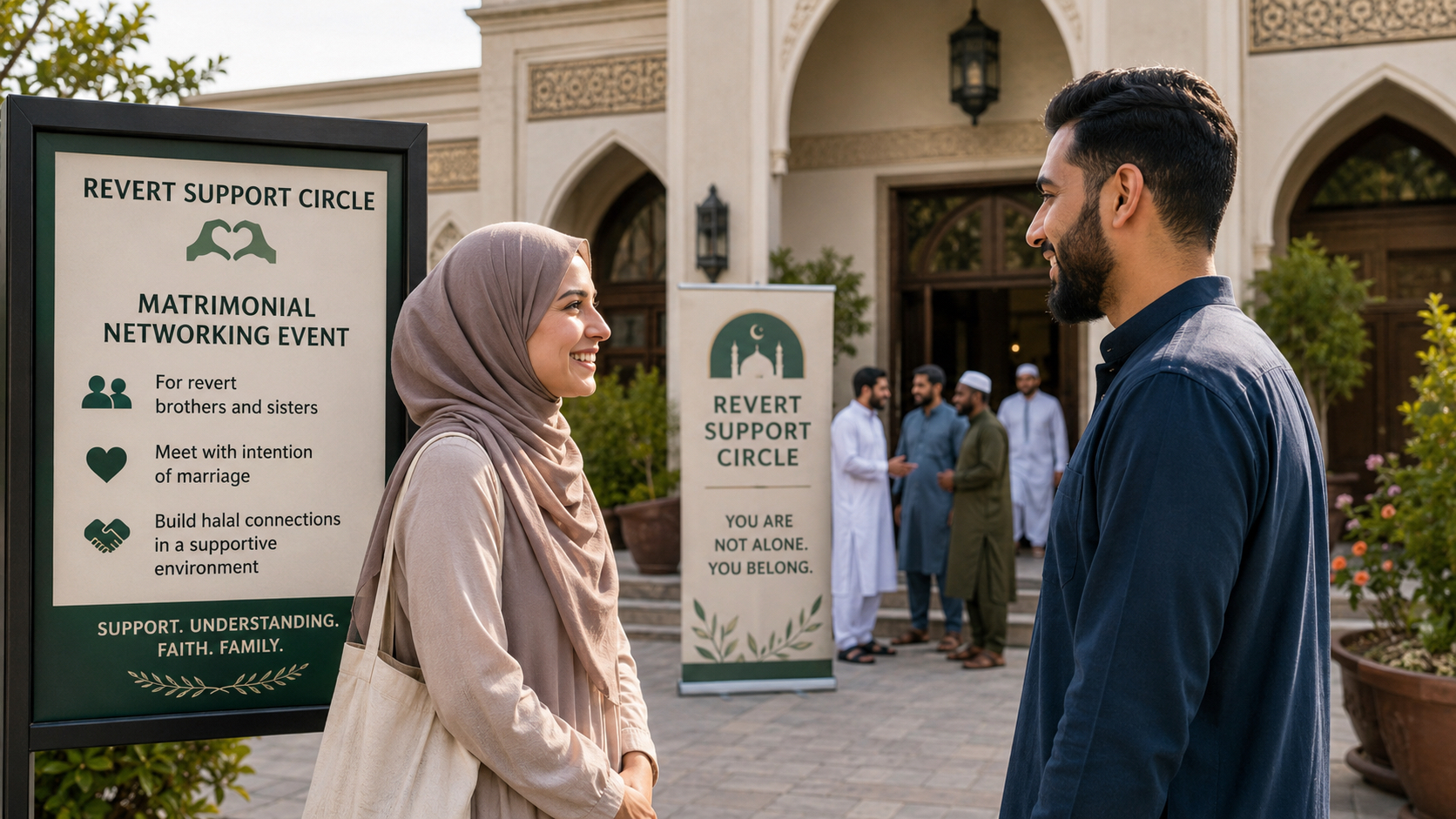
Finding a partner within the Muslim community is a profound journey of faith, patience, and intentionality. When an individual feels a strong inclination toward marrying a revert—someone who has actively chosen and embraced Islam later in life—the search requires a unique, nuanced approach.
Reverts often face a distinct set of circumstances. Unlike “raised or born” Muslims, who can frequently rely on deep-rooted, multi-generational family networks, cultural matchmaking customs, and extensive community ties, new Muslims often navigate the faith entirely on their own. They may be the only Muslims in their families, meaning they lack the traditional support systems to help them find a compatible partner.
Consequently, if you are looking to find a revert for marriage, you cannot simply rely on passive waiting. You must adopt a proactive, community-minded, and highly empathetic strategy.
Below is an in-depth guide detailing six practical ways to find a revert for marriage, how to navigate these spaces respectfully, and the critical etiquette required to build a successful, blessed union.
The Unique Dynamics of Marrying a Revert
Before diving into where and how to find a potential spouse, it is crucial to understand the why and the what. Marrying a revert is a beautiful undertaking. It brings together diverse backgrounds, combines fresh spiritual enthusiasm with established traditions, and can result in a household deeply committed to conscious Islamic practice.
However, it also requires a mature understanding of the challenges a revert might face. These include:
The Absence of a Muslim Family Network: They may not have a traditional Wali (guardian) from their bloodline to vet suitors.
Cultural Isolation: They may feel caught between their birth culture and the dominant cultures of the local Muslim community.
A Continuous Learning Curve: They are often actively building their Islamic knowledge base at a rapid pace.
By keeping these factors in mind, your search will shift from a checklist of preferences to a holistic search for a life partner.
1. Connect via Local Mosque Revert Support Groups
Many medium-to-large Islamic centers and mosques host dedicated support groups, weekly circles, or educational classes specifically tailored for new Muslims. These spaces are vital lifelines where reverts learn how to pray, study the Quran, and find companionship in their new faith. Naturally, as these individuals stabilise their practice, many begin to look toward completing half their Deen (faith) through marriage.
How to Approach This Practically
It is absolutely vital that you do not simply show up uninvited to these support groups to scout for a spouse. These classes are sacred, vulnerable spaces for people learning their faith, and treating them like a singles mixer can cause immense discomfort and distrust.
Instead, follow the proper channels:
Speak to the Leadership: Schedule a meeting with the Mosque Administration, the Imam, or the specific coordinator of the New Muslim program.
Be Transparent: Explain your intentions clearly. Let them know you are looking for marriage and are genuinely interested in being introduced to a revert.
Offer Yourself as a Reference: Provide the Imam or coordinator with your background, references, and a clear picture of what you bring to a marriage. Because these leaders often act as mentors and surrogate parental figures to reverts, they are highly protective. If they trust you, they will gladly keep you in mind when a brother or sister expresses a readiness for marriage.
2. Leverage Trusted, Vetted Third-Party Matchmakers
Matchmaking is a time-honoured tradition in Islamic history. While the term “matchmaker” might conjure up images of aunties whispering at community events, modern Islamic matchmaking has evolved into a structured, professional avenue. This is particularly beneficial for reverts who explicitly request third-party assistance because they do not have Muslim parents to handle introductions for them.
| Traditional Search Strategy | Revert-Centric Search Strategy |
|---|---|
| Cultural community events | Mosque leadership & Imams |
| Extended relative connections | Professional matchmakers |
| Family-to-family networks | Dedicated revert organisations |
Finding the Right Matchmaker
Look for individuals or organisations within the community who have a proven track record of integrity and confidentiality.
Community Vouched: Seek out matchmakers who operate under the supervision of local scholars or trusted community figures.
Clearly Define Your Preferences: When filling out profiles or conducting interviews, be upfront about your desire to marry a revert. Explain why you have this preference so the matchmaker can assess whether your intentions align with the individuals on their roster.
Respect the Role of the Chaperone: A professional Islamic matchmaker will ensure that all communication remains within halal boundaries, providing a safe platform where both parties can ask serious, foundational compatibility questions without pressure.
3. Attend National Islamic Conventions and Seminars
National and regional Islamic conventions draw tens of thousands of Muslims from all walks of life. Because these events feature prominent scholars, intensive workshops, and diverse crowds, they are naturally frequented by converts seeking knowledge, community, and spiritual rejuvenation.
Maximising the Opportunity
Conventions are busy environments, but they almost always feature structured avenues for those looking to get married.
Marriage Events: Most major conventions host dedicated matrimonial services or speed-networking sessions. These events are designed with strict Islamic guidelines in mind, allowing participants to sit down, speak face-to-face for a few minutes, and exchange contact information through a coordinator if there is mutual interest.
Organic Networking: Beyond the formal matrimonial events, conventions offer a space to network with brothers or sisters from different cities. If you are a brother, connecting with other brothers from various regions can open doors; they might know someone in their home community looking for a spouse. The same applies to sisters networking with other sisters.
4. Utilise Reputable Muslim Matrimonial Apps (With Strict Boundaries)
In the digital age, marriage apps like Pure Matrimony and SunnahMatchhave become mainstream tools for Muslims worldwide. For reverts who live in areas with small Muslim populations or who lack physical access to large mosques, digital platforms are often their primary window into the wider community.
Best Practices for Digital Searching
Using apps requires a high degree of self-discipline and intentionality to ensure the process remains pleasing to Allah.
Be Explicit in Your Profile: Use your biography section to clearly state your values, your level of practice, and your preference for a partner who is a revert. This saves time and ensures that those swiping or liking your profile understand your direction.
Utilise Search Filters: Most reputable apps allow you to filter by background, ethnicity, and religious practice. Some platforms even allow you to filter or search specifically for individuals who have identified as converts/reverts.
Enforce Safety and Halal Boundaries Early: It is remarkably easy for digital conversations to drift into casual, overly familiar territory. To protect yourself and the person you are speaking with, bring up the topic of a third-party involvement early. If you are speaking with a revert sister, ask if she has an Imam, a mentor, or a trusted Muslim friend who can act as her chaperone or Wali for your conversations. If she does not, offer to involve a trusted elder from your own side to keep the communication transparent.
5. Network Through Revert-Centric Charities and Non-Profits
There are numerous non-profit organisations globally that focus entirely on the welfare, education, and legal and social integration of new Muslims. These organisations handle everything from providing free Islamic books to organising social dinners and mentorship programs.
One of the most respected organisations for female reverts is UK-based Solace. Other charities including Hope & Help assist both revert brothers and sisters in marriage matters.
Cultivating an Organic Connection
Volunteering with or supporting these charities is a powerful way to give back to the community while naturally placing yourself in circles where you might meet a future spouse.
Serve the Community First: Enter these spaces with the sincere intention of helping new Muslims settle into the faith. Whether it is helping organise an event, donating resources, or assisting with administrative work, your primary focus should be service (Khidmah).
Build Trust with the Directors: As you work alongside the organisers, your character, reliability, and manners (Akhlaq) will naturally shine through. When the leaders of these organisations see that you are a serious, balanced, and kind individual, they will feel entirely comfortable recommending you if a revert within their network inquires about marriage opportunities.
6. Mobilise Friends, Family, and Your Existing Network
Never underestimate the power of your current social circle. Even if your immediate family does not personally know any reverts, the web of human connection is vast. Your cousin might have a coworker who recently accepted Islam; your friend’s spouse might mentor a new sister at a local university; your coworker might go to a different mosque where several reverts attend.
Putting the Word Out Effectively
People cannot help you if they do not know what you are looking for.
Be Clear and Direct: Sit down with trusted friends, family members, and community elders. Let them know explicitly: “I am looking to get married, and I am very interested in marrying a revert. If you know someone of good character who has embraced Islam, please let me know so we can initiate a formal introduction.”
Look Beyond Your Immediate Cultural Circle: If your family only interacts with people from their specific home country or cultural background, encourage them to look wider. Reverts come from every ethnic, socio-economic, and geographic background imaginable. Widening your network’s worldview is a prerequisite to successfully finding a revert spouse.
Navigating the Halal Matchmaking Process with a Revert
Once you have successfully found a potential match through one of these six avenues, the actual process of courtship and vetting requires distinct care. Because the standard cultural safety nets may not be present, you must be doubly sure to uphold Islamic etiquette.
Addressing the Lack of a Traditional Wali
For a revert sister, one of the most immediate challenges in marriage is the absence of a Muslim father to act as her Wali (guardian). In Islam, the Wali plays a vital role in protecting the sister, vetting the suitor’s background, and ensuring she is not taken advantage of.
The Appointed Wali: If a sister’s biological father is not Muslim, he cannot fulfill the legal Islamic role of a Wali for the marriage contract (Nikah). In this case, the role transfers to an Islamic authority figure—typically the local Imam, a judge, or a trustworthy, knowledgeable Muslim leader appointed by the community.
Do Not Bypass the Guardian: Some individuals mistakenly think that because a sister does not have a Muslim father, they can conduct the entire relationship, dating period, and marriage arrangements privately. This is a massive mistake that strips the sister of her Islamic rights and protections. Insist on involving her chosen Islamic guardian or mentor as early as possible.
Key Topics to Discuss During Vetting
When sitting down to discuss compatibility, ensure your conversations cover the foundational pillars of a long-term marriage. Do not shy away from deep, difficult questions.
| Category | Crucial Discussion Points |
|---|---|
| Family Dynamics | How will we handle holidays (Christmas, Thanksgiving, etc.) with non-Muslim in-laws? How will we protect and respect their relationship with non-Muslim grandparents? |
| Spiritual Growth | What are our expectations regarding Islamic learning, daily prayers, and modesty? Are we willing to grow patiently together? |
| Financial/Lifestyle | What are our expectations regarding career, home life, and raising children within an Islamic framework? |
| Cultural Harmony | How will we blend my cultural traditions with your background? Are we prepared to handle biases from extended family members? |
Critical Pitfalls to Avoid
To ensure your search is blessed and successful, you must guard your heart and mind against several common pitfalls that can arise when searching for a revert spouse.
1. Avoid “Saviour Complex” and Fetishisation
One of the most damaging mindsets a person can bring to this journey is the desire to “save” or “rescue” a revert. Reverts are independent, mature individuals who have made a profound intellectual and spiritual choice. They do not need a savior; they need a partner.
Similarly, beware of exoticizing or fetishizing specific racial or ethnic backgrounds under the guise of wanting to marry a revert. Treat every potential spouse with the deep human and Islamic dignity they deserve, focusing entirely on their character, faith, and personal compatibility.
2. Guard Against Spiritual Burnout and High Expectations
Sometimes, born Muslims seek out reverts because they assume every revert is a spiritual superhero who spends all night in prayer and has perfect character. While the zeal of a new Muslim is beautiful, they are still human beings. They have good days and bad days, doubts, flaws, and areas where their knowledge is still developing. Expecting perfection from a revert is unfair and sets the marriage up for strain. Approach the relationship with a willingness to be patient, supportive, and compassionate.
3. Do Not Ignore Extended Family Relations
When you marry a person, you are, to a degree, connecting with their family. A revert’s family may not be Muslim, but Islam places an extraordinarily high emphasis on maintaining the bonds of kinship (Silat al-Rahim).
Show Kindness to Non-Muslim In-Laws: Your potential spouse will still love, respect, and care for their non-Muslim parents. You must be prepared to welcome them into your life, treat them with impeccable manners, and navigate family gatherings with grace, wisdom, and strict adherence to your own Islamic values without causing unnecessary alienation.
Join Our Founding 200 Cohort
We are looking for our first 200 serious members to help launch this community with guidance on navigating the matchmaking process, including assistance with Wali/guardian introductions for reverts.
Conclusion: Trusting Allah’s Timing
Finding a spouse is a matter of Qadr (divine decree). You can employ all six of these practical methods, but the ultimate success rests in the hands of Allah.
As you step out to connect with local mosques, engage with matchmakers, utilize digital apps with care, and network within your community, keep your intentions entirely pure. Frequently renew your Niyyah (intention), making sure your desire to marry a revert stems from a genuine wish to build a righteous, loving home that pleases Allah.
Approach the process with open communication, clear boundaries, and deep respect for the incredible journey the other person has taken to find Islam. When you honour the path of those who have traveled through searching to find the truth, Allah will, in sufficing measure, bless your own path toward finding a righteous companion.