
When two people decide to build a life together, the excitement is palpable. Venues are visited, caterers are sampled, outfits are tailored, and guest lists are painstakingly debated over cups of tea. It is entirely normal to want a memorable wedding day. Yet, a striking imbalance exists in modern society: people routinely spend six months planning a single day, but barely spend six hours preparing for the rest of their lives.
A wedding is an event lasting a few hours; a marriage is a lifelong journey requiring patience, emotional maturity, and shared values.
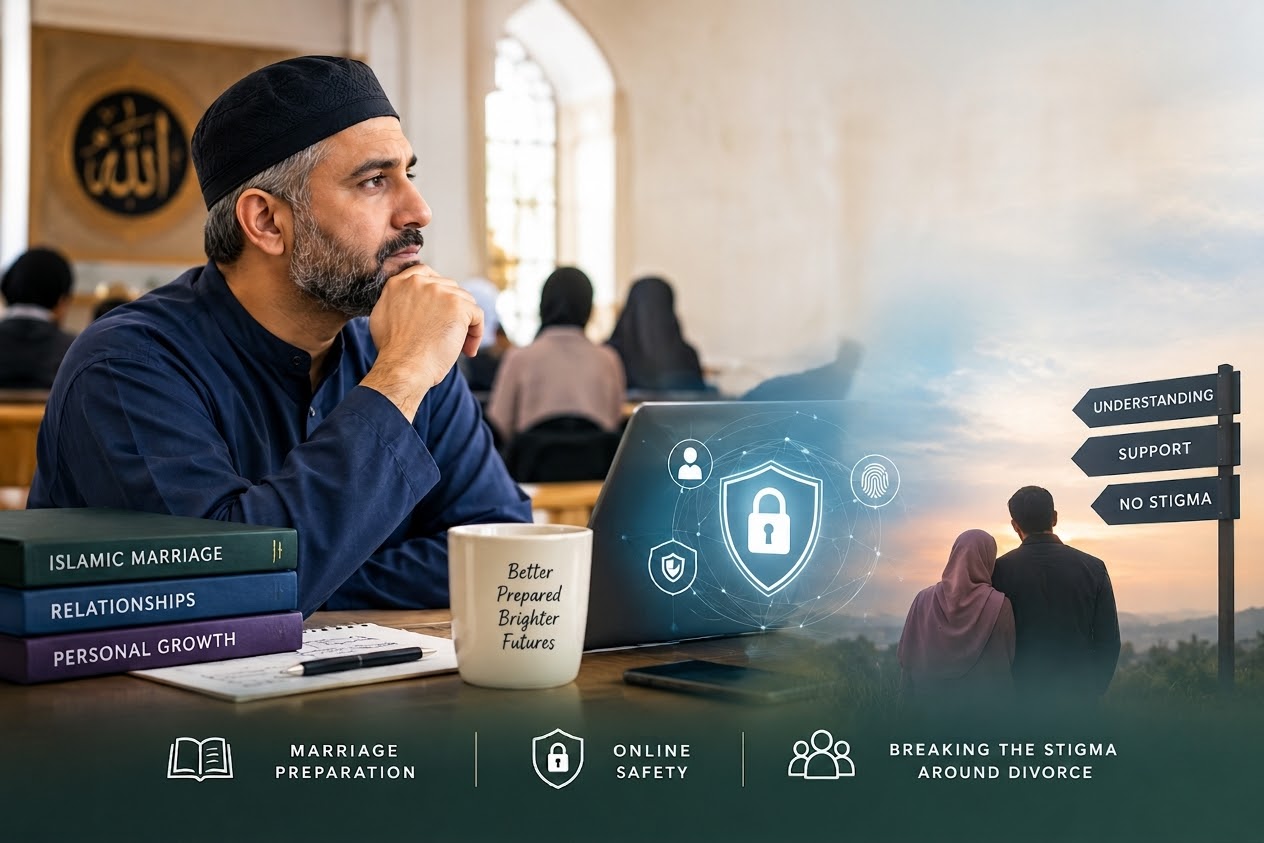
To help address this mindset, Mostafa, founder of Muslim Marriage Services (MMS), attended the Marriage 101 course at Liverpool’s Al Rahma Mosque, delivered by Sheikh Dr Mostafa Al Shaybani. The session brought together single individuals, engaged couples, and community leaders to discuss the realities of building strong relationships. The discussions raised fundamental questions about premarital education, digital safety, and the cultural attitudes that hold back meaningful connections.
Should Premarital Coaching Be Mandatory?
During the open audience session at Liverpool Al Rahma Mosque, Mustafa posed a question to the Sheikh: Should Muslim-majority nations mandate premarital coaching for all couples before marriage, following models established in countries like Malaysia and Indonesia?
The Sheikh’s response was immediate: “Absolutely.”
The rationale behind mandatory premarital education is simple: prevention is far better than cure. In Malaysia, where premarital courses have been a legal requirement for decades, the initiative has successfully contributed to lower divorce rates and higher marital stability. Rather than leaving young couples to navigate complex marital challenges through trial and error, structured coaching equips them with essential life skills before they sign the contract.
When couples undergo premarital training, they address practical matters that frequently cause friction later on:
- Communication and Emotional Intelligence: Learning how to express frustration without resorting to insult or withdrawal. Understanding how your partner processes stress is key to preventing minor disagreements from turning into major conflicts.
- Financial Alignment: Money remains one of the primary sources of marital tension globally. Premarital coaching encourages open dialogue about debts, savings habits, financial expectations, and household budgeting.
- Roles, Responsibilities, and In-Laws: Defining expectations around household responsibilities, career ambitions, and boundaries with extended family ensures both partners share a clear, unified vision.
- Conflict Resolution: Developing constructive mechanisms to de-escalate arguments respectfully, ensuring that issues are solved as a team rather than fought as opponents.
Normalising and requiring premarital preparation ensures couples enter marriage with eyes wide open and a practical toolkit for long-term success.
Navigating the Digital Matrimonial Landscape Safely
As traditional community avenues for finding a spouse evolve, single and divorced Muslims are increasingly turning to online platforms and apps to take control of their search. The convenience of digital matchmaking allows people to connect across cities and countries, expanding their horizons beyond immediate family networks.
However, taking initiative online without adequate structural safeguards leaves people vulnerable. Misrepresentation, fake profiles, romance scams, and unverified intentions are common pitfalls that create fatigue and distrust among genuine seekers.
Technology itself is not the problem—the lack of verification is.
To address this gap, modern matchmaking platforms must prioritise safety and integrity over sheer user numbers. MMS
addresses these challenges by operating under Certified Social Enterprise standards, incorporating rigorous security frameworks including:
- Identity Verification: Utilising secure verification platforms like Yoti ID to confirm that users are genuine, real individuals before they interact with others.
- Fraud Screening: Implementing proactive screening tools to identify suspicious activity and protect users from bad actors.
- Accountability and Ethics: Operating as a social enterprise ensures that user wellbeing and safety take priority over predatory monetisation models.
When safety and verification are embedded into digital platforms, individuals can search for a partner with confidence, knowing the environment is grounded in mutual respect and transparency.
Confronting the Cultural Stigma Around Divorce
Following the workshop in Liverpool, a conversation occurred that illuminated a deep-seated cultural issue within many communities.
A fellow attendee approached Mustafa to share his thoughts on the course. The brother mentioned that he had never trusted online marriage platforms, and then asked Mustafa directly: “Are you married?”
Mostafa answered honestly: “I was. I’m divorced.”
The atmosphere immediately shifted. The man’s tone grew cool and dismissive. He noted that he was getting married soon himself, adding that he would never take marriage advice from a divorcee.
Reframing Experience and Wisdom
Dismissing someone’s perspective purely because they have experienced divorce reveals a fundamental misunderstanding of personal growth and relationship dynamics:
- Marriage does not automatically grant expertise: Simply being married does not mean a person possesses good relationship skills, empathy, or wisdom. Many people remain in unhappy or unmanageable arrangements without ever learning how to navigate healthy relationship dynamics.
- Divorce does not equal a lack of wisdom: Failing at a marriage—or making the brave decision to end an unhealthy one—often yields profound lessons. Those who have lived through the pain of a breakdown frequently possess clearer insights into red flags, communication breakdowns, and the practical realities of compatibility than those who have never been tested.
Consider this thought experiment: If a highly respected scholar or counsellor who happened to be divorced was facilitating a marriage course, would someone refuse to learn from them? Or if a family member fell in love with someone who was previously married, would that same prejudice hold?
From an Islamic historical perspective, the stigma around divorce is entirely cultural, not spiritual. Many revered figures in Islamic history, including noble women and companions of the Prophet, were married more than once. Divorce was treated as a lawful, dignified resolution when compatibility failed, not a permanent mark of shame. Dismantling this stigma is vital if we want to build compassionate, realistic communities.
Building Stronger Foundations for the Future
The core lesson from Liverpool Al Rahma Mosque’s Marriage 101 course is clear: prepare for the marriage, not just the wedding day.
A beautiful reception lasts a few hours, but mutual respect, shared values, verified trust, and continuous emotional effort are what keep a home together for decades. By embracing thorough premarital training, demanding safer digital environments, and removing unfair judgments against those who have experienced divorce, we create a healthier culture for everyone seeking companionship.
If you are single, divorced, or simply looking for a verified, secure platform to find a compatible partner, consider joining the founding 200 waitlist for Muslim Marriage Services via the link in our bio. Together, we can build relationships rooted in trust, safety, and genuine preparation.