

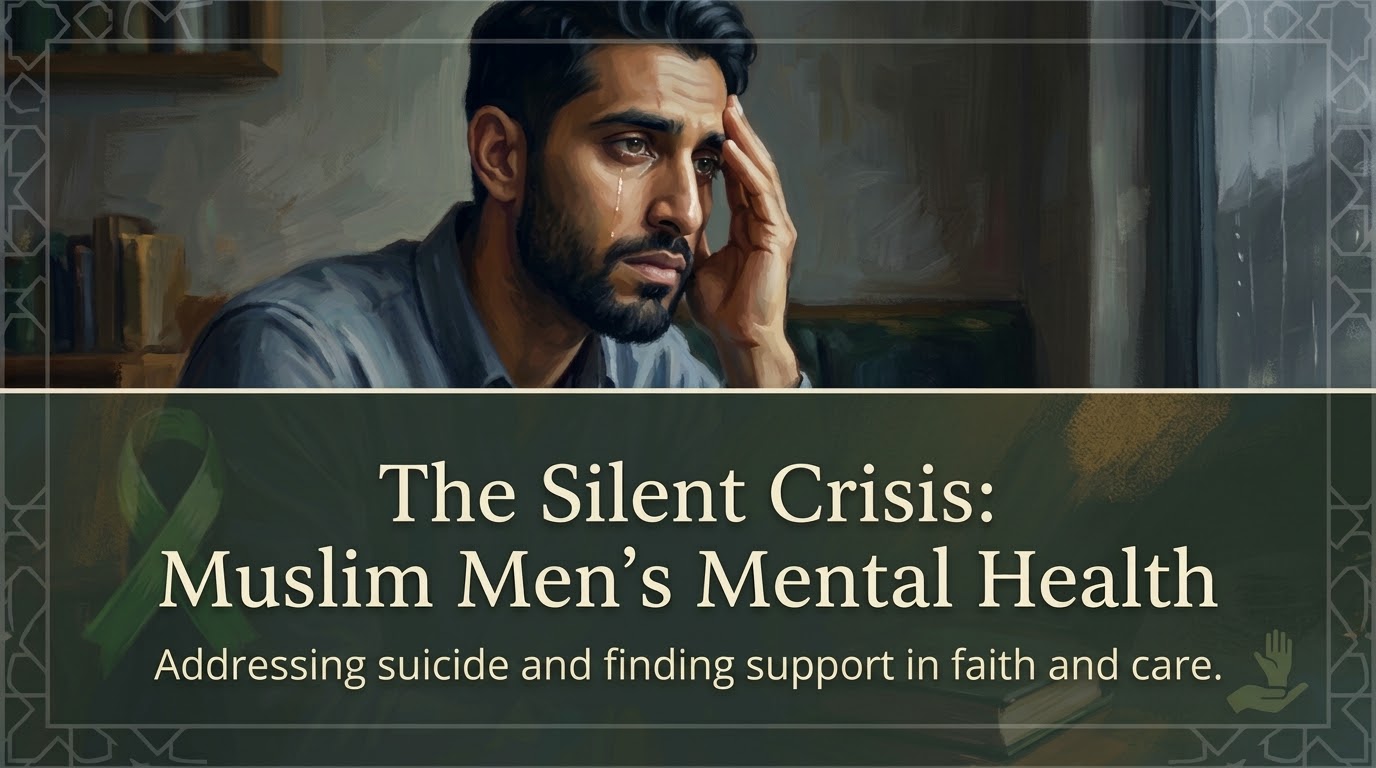
How many Muslim men are suffering in silence?
How many Muslim men are carrying silent burdens because they feel they have nowhere to turn?
Behind the image of the dependable husband, responsible father, hardworking son or successful professional, there may be someone experiencing profound emotional distress.
He might be going to work every morning, attending the mosque, supporting his family and fulfilling his responsibilities. To everyone around him, life may appear normal. Yet privately, he could be struggling with anxiety, financial worries, relationship difficulties or a loneliness he finds difficult to explain.
Perhaps he believes admitting his struggles would disappoint his family. Perhaps he fears being judged by his community. Or perhaps he has tried to speak about his problems before, only to be told to be stronger or have more faith.
So he says nothing.
At Muslim Marriage Services (MMS), we believe honest conversations about men’s mental health are essential. We must be willing to discuss uncomfortable subjects, including suicide, marital breakdown, separation and the loneliness that can follow divorce.
Our message is simple: struggling does not mean your faith is weak, and asking for help is not a sign of failure.
1. The statistics reveal a serious problem
Suicide remains a significant public health concern in England and Wales, with men accounting for approximately three-quarters of registered suicide deaths.
According to the Office for National Statistics (ONS), men aged 50–54 have faced particularly high suicide rates. The statistics highlight the importance of recognising men’s mental health needs and providing support before distress becomes a crisis.
Research also suggests that suicidal thoughts are not always visible to those around the person experiencing them.
The Muslim community has reasons to take this issue seriously, too. A study examining mental health among young British Muslims reported that 32% of respondents had experienced suicidal thoughts. The research also highlighted how some young Muslim men experiencing mental health difficulties had spoken to nobody about their struggles.
These findings should be interpreted in the context of the study’s population and methodology rather than treated as representative of every Muslim man in Britain.
Nevertheless, they raise an important question: how many brothers are struggling without telling anyone?
Statistics about suicide deaths cannot capture the full extent of the emotional distress experienced by people who survive a crisis, those who experience suicidal thoughts or those who struggle privately for years.
We cannot assume that every man experiencing hardship will develop suicidal thoughts. Nor should we assume that a man who appears successful, financially secure or religiously observant is necessarily doing well emotionally.
What matters is recognising distress, making conversations easier and ensuring that appropriate help is available.
2. The pressure to appear strong
Many men grow up believing they must be strong, dependable and capable of handling their problems independently.
Responsibility and resilience are valuable qualities. The problem arises when strength is defined as never admitting pain.
A man may believe he must keep his worries to himself because his family depends on him. He may fear that expressing vulnerability will cause others to lose respect for him. He may also worry that discussing his mental health could damage his reputation or future marriage prospects.
Consequently, he learns to hide his difficulties.
He might withdraw from friends, become increasingly irritable or insist that everything is fine even when he is struggling to cope.
These changes do not automatically indicate a mental health crisis, but they can be reasons to check in and ask how someone is doing.
We need to challenge the assumption that men must be emotionally invulnerable to be respected.
Real strength includes recognising when you need support and having the courage to seek it.
Men should not have to wait until they reach breaking point before their difficulties are taken seriously.
3. Financial pressure and the expectation to provide
Financial insecurity can place enormous strain on a man’s mental wellbeing.
The cost of housing, household bills, childcare, supporting relatives and managing debt can become overwhelming. A man may worry about losing his job, failing to meet financial commitments or being unable to provide the life he wants for his family.
For some, financial pressure is accompanied by shame.
They compare themselves with friends, relatives or people they see on social media. They may feel their income, possessions or professional achievements determine their worth.
For Muslim men who take their family responsibilities seriously, these concerns can be particularly painful when they believe they are falling short of their own expectations.
Yet a person’s worth cannot be reduced to his salary, job title or bank balance.
Financial difficulties are problems to address, not evidence that someone has failed as a human being.
Depending on the circumstances, practical help might include speaking to a debt adviser, reviewing household finances or contacting a GP if the pressure is affecting mental health.
Emotional support matters too. A man who is worried about money needs an opportunity to discuss those concerns without being ridiculed or made to feel worthless.
Sometimes, what he needs first is for someone to listen rather than immediately offer solutions.
4. Marriage breakdown, separation and divorce
At MMS, we recognise that relationships can have a profound effect on emotional wellbeing.
Marriage can provide companionship, affection and a sense of belonging. However, when a marriage becomes strained or breaks down, the emotional consequences can be devastating.
A man experiencing separation or divorce may be dealing with several losses simultaneously.
He might be grieving the relationship he thought would last a lifetime. He may be worried about his children, living arrangements, legal proceedings or financial obligations. He might face uncertainty about his future and question where his life went wrong.
There may also be feelings of rejection, embarrassment, anger, guilt or regret.
Some men struggle to explain these emotions because they believe they should simply move on. Others fear that discussing their difficulties will invite gossip or cause people to take sides.
We should not assume that a divorced man is coping simply because he continues to work and fulfil his responsibilities.
Equally, divorce does not inevitably lead to mental health difficulties. Each person’s experience depends on their circumstances, relationships and support network.
What matters is recognising that relationship breakdown can be a serious source of emotional strain.
If you know a brother who is separating or has recently divorced, do not wait for him to ask for help. Check in with him. Invite him for a meal. Ask whether he would appreciate a conversation or practical assistance.
A simple message can communicate something important: you have not been forgotten.
5. The loneliness that can follow divorce
One of the most difficult aspects of separation can be the loneliness that follows it.
A man who once shared his daily life with a spouse may suddenly find himself returning to an empty home. Ordinary moments that once seemed unremarkable can become painful reminders of what has changed.
He might miss conversation over dinner, discussing his day with someone he trusts or simply knowing another person is there.
His social circumstances may change, too. Friends who socialised as couples might become less available. Family members may be preoccupied with their own responsibilities. Some people may avoid him because they do not know what to say.
For men who have built much of their social life around their marriage, rebuilding a sense of connection can take time.
Loneliness is not necessarily the same as being physically alone. A man can have colleagues, relatives and acquaintances around him yet feel that nobody understands what he is experiencing.
This is why simply telling a divorced man to keep busy may not be enough.
Exercise, volunteering and social activities can help create structure and connection, but they do not replace the need to feel heard and understood.
Men also need friendships in which conversations can go beyond work, football, finances and everyday responsibilities.
It should be possible to tell another man, “I’m having a difficult time,” without fearing that the admission will become community gossip.
We must also avoid assuming that every divorced man needs to remarry immediately. Some need time to recover, reflect and rebuild their lives before considering another relationship.
A brother’s life retains its value through every stage of his personal journey.
6. Faith matters, but shame is not support
For Muslim men, faith can be an important source of meaning, comfort, hope and connection.
Prayer, remembrance of Allah, reading the Qur’an and speaking with a trusted religious scholar may help someone navigate difficult circumstances.
However, spiritual support should not be used as a substitute for appropriate mental health care when professional help is needed.
Telling a struggling brother simply to “have more faith” is not enough.
Such a response may be intended to encourage him, but it can unintentionally suggest that his distress exists because he is not sufficiently religious.
A man who is already struggling may then feel guilty about his mental health as well as the circumstances that caused it.
We must distinguish between offering spiritual encouragement and using religious language to dismiss someone’s suffering.
A Muslim can value his faith deeply and still experience depression, anxiety or suicidal thoughts. These experiences should not automatically be interpreted as evidence of weak belief.
Seeking medical advice, counselling or psychiatric support does not mean abandoning one’s faith. Spiritual practices and professional treatment can complement one another.
A trusted imam may offer spiritual guidance, listen with empathy and encourage someone to seek specialist support. A GP or mental health professional can assess symptoms and discuss appropriate treatment.
These roles are different, and both can be valuable.
Our communities should make it easier for men to access support without feeling they must choose between their faith and their wellbeing.
7. The role of imams, families and community leaders
Muslim communities have an opportunity to make a meaningful difference to men’s mental health.
Imams, mosque committees, community organisations, family members and friends may be among the first people a struggling man approaches. Their response can influence whether he feels safe enough to seek further help.
When a brother speaks about emotional distress, he should not be met with ridicule, impatience or moral judgement.
Instead, we can:
- Listen without judgement. Give him space to explain what he is experiencing without immediately criticising his decisions.
- Challenge stigma. Make clear that mental health difficulties are not evidence of weak faith or personal failure.
- Encourage professional support. Help him contact his GP or appropriate mental health services when necessary.
- Build community connections. Create opportunities for men to develop supportive friendships and discuss difficult experiences.
- Respect confidentiality. Treat personal disclosures carefully, while recognising that immediate safety concerns may require urgent action.
Families can make a difference, too.
Rather than assuming a husband, father, son or brother will speak up when he needs help, make time to ask how he is really doing.
Do not use his vulnerability against him during a future disagreement. Trust is built when people know their honesty will be treated with care.
Community leaders can also help by developing links with reputable mental health organisations and ensuring that those supporting vulnerable people understand when specialist assistance is needed.
Compassion does not require us to have all the answers. It requires us to take someone’s distress seriously.
8. How to support a brother who may be struggling
You do not need to be a therapist to show compassion, but you should recognise the limits of what you can do.
If you are concerned about a brother, consider these steps.
Start a conversation. Choose a suitable time and ask, “I’ve noticed you seem to be having a difficult time lately. How are you really doing?”
You do not need a perfect opening line. Genuine concern matters more than polished wording.
Listen carefully. Avoid interrupting with comparisons or immediately telling him what he should have done. Acknowledge his feelings and allow him to speak.
Ask directly about suicide if you are concerned. If he talks about hopelessness or suggests that life is no longer worth living, ask calmly whether he is thinking about suicide. Asking directly does not mean putting the idea into his head; it can provide an opportunity for an honest conversation.
Encourage appropriate help. Offer to help him contact his GP, access urgent mental health support or find a qualified counsellor.
Keep checking in. A message a few days later, an invitation to meet or an offer of practical help can show that your concern is genuine.
Respect his privacy. Do not share personal details unnecessarily. If you believe he is in immediate danger, however, safety takes priority over keeping the situation entirely private.
Remember that you are not responsible for solving every problem he faces. You can care deeply about someone while recognising that trained professionals may be needed.
9. If you are the man who is struggling
Perhaps you are reading this article because some of these experiences feel familiar.
Maybe you have been struggling with a relationship breakdown, financial difficulties, loneliness or a sense that you have disappointed the people who matter most to you.
Perhaps you have become so accustomed to keeping everything inside that you no longer know how to begin a conversation about what you are feeling.
You do not have to explain everything perfectly before asking for help.
Start with one person you trust. Tell him you are finding things difficult and would appreciate someone listening. If you feel unable to speak to a friend or relative, consider contacting your GP or a professional support service.
If you have persistent low mood, anxiety, hopelessness or thoughts of suicide, please seek professional help rather than waiting for things to become unbearable.
If you are worried about your immediate safety, do not stay alone with the situation. Contact someone who can be with you and help you obtain urgent assistance.
You may not be able to resolve every problem today. Financial pressures, legal difficulties and relationship disputes can take time to address. But you do not have to face them all at once, or without support.
You are more than your income, marital status, professional achievements or the expectations other people place upon you.
Your circumstances are not the entirety of your identity. You deserve care and respect, including when life has not turned out as you hoped.
10. Where to find mental health support in the UK
If you or someone you know is struggling, support is available.
- NHS urgent mental health support: In England, call 111 and select the mental health option, or visit the NHS urgent mental health help page.
- Samaritans: Call 116 123, free of charge, at any time, to talk about what you are experiencing. Visit Samaritans.
- Your GP: Discuss mental health symptoms, treatment options and referrals to appropriate services.
- Emergency help: If someone’s life is in immediate danger, or they cannot keep themselves or someone else safe, call 999 or go to A&E.
If you are supporting someone who may be at immediate risk of suicide, take the situation seriously. Stay with them if it is safe to do so, involve appropriate help and do not leave them to manage an immediate crisis alone.
Seeking help is not a failure. A mental health emergency deserves the same seriousness as any other medical emergency.
11. What this means for Muslim Marriage Services
Marriage should be approached with trust, care and responsibility.
But conversations about marriage must also acknowledge the realities that affect emotional wellbeing, including relationship difficulties, separation, divorce and rebuilding life afterwards.
We must not pretend every marriage will succeed or that marriage itself is a cure for loneliness or mental health difficulties.
A healthy relationship can provide companionship and support, but emotional wellbeing also depends on friendships, family connections, personal circumstances and access to appropriate care.
Our responsibility is to encourage honest conversations about the challenges people face before, during and after marriage.
That includes recognising that men can be vulnerable, that divorced men may need support, and that seeking help should never become a source of shame.
MMS encourages trust, confidentiality and responsible support. When a brother needs specialist mental health care, he should be directed towards appropriate professional services rather than relying on a marriage service to provide clinical treatment.
The objective is not simply to encourage men to talk. It is to help create the conditions in which talking can lead to meaningful support.
Conclusion: Let us break the silence before we lose another brother
Muslim men are not immune to emotional pain.
They can experience financial insecurity, relationship breakdown, loneliness, depression and suicidal thoughts. They can struggle while continuing to work, support their families and fulfil their responsibilities.
The fact that a man appears strong does not mean he is coping. The fact that he remains silent does not mean he has nothing to say.
We need to stop treating emotional vulnerability as a weakness and start treating compassionate support as a shared responsibility.
Families must listen. Friends must check in. Imams and community leaders must help challenge stigma. Professional services must remain part of the conversation.
And every man who is struggling deserves to know that asking for help is a legitimate and courageous step.
If you know a brother who has been unusually quiet, withdrawn or overwhelmed, reach out to him. You do not need to have all the answers. Sometimes the first step is simply to let him know that someone cares.
If you are struggling yourself, please do not believe that you must carry the burden alone. Speak to someone you trust and seek professional help when you need it.
A brother’s life matters. His wellbeing matters. And he deserves support before his suffering becomes a crisis.
At MMS, we encourage honest conversations about men’s wellbeing, marriage, relationships, trust and the pressures that can remain hidden behind closed doors.
Please share this article with someone who may benefit from reading it, and follow MMS for more thoughtful conversations about marriage, relationships, trust and wellbeing.
Let us build communities in which no brother feels ashamed to speak, no family is afraid to listen and no man is made to feel that he must face his darkest moments alone.
May Allah grant those who are struggling ease, surround them with compassionate people, and guide us all towards greater understanding, kindness and support.
Ameen.
Sources and further support
- Office for National Statistics (ONS), Suicides in England and Wales.
- Institute of Muslim Welfare and Social Research, What is the state of Mental Health amongst Young Muslims?.
- Samaritans, Free, confidential emotional support.
This article is intended to raise awareness and encourage help-seeking. It is not a substitute for medical advice, diagnosis or professional mental health care.