
The Unforgettable Moment
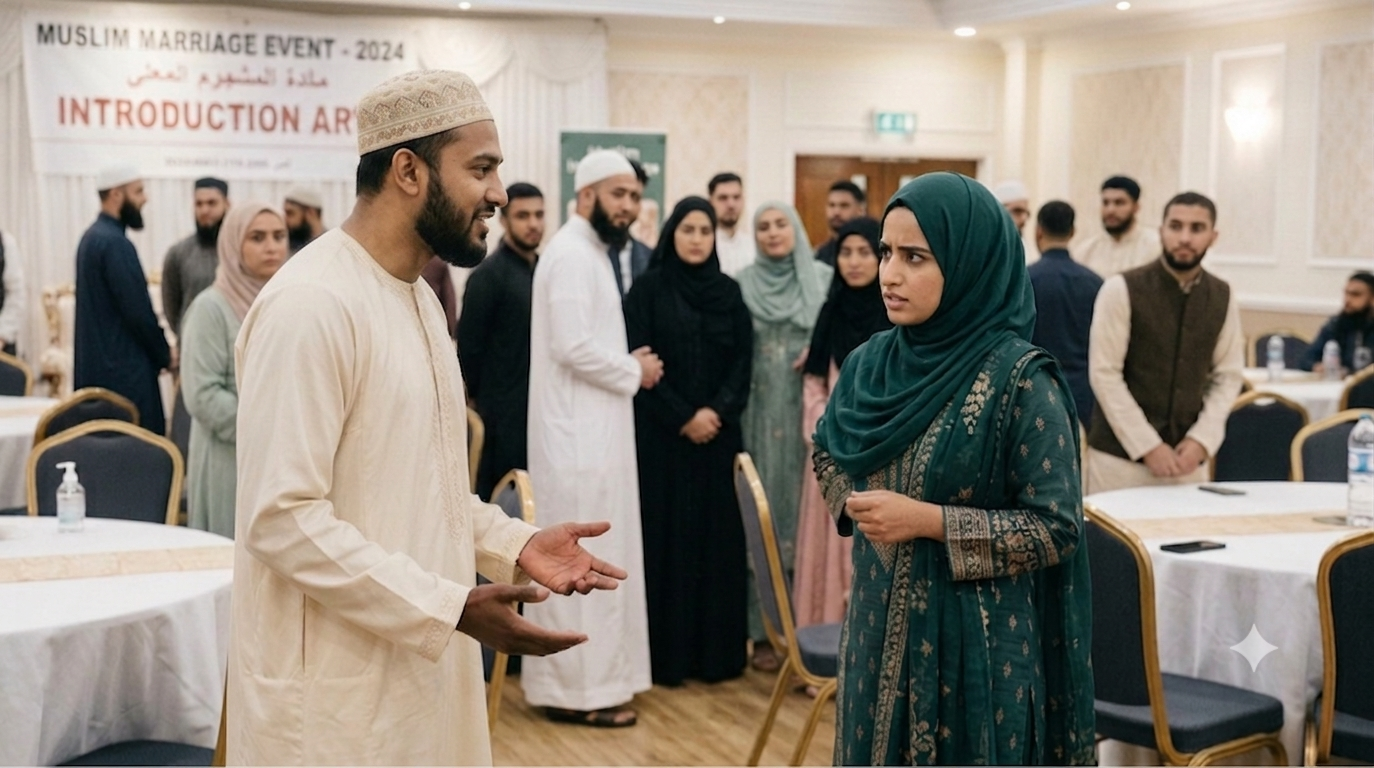
Back in 2016, I attended a Muslim marriage event in Manchester. I walked into the room with an open mind, genuine optimism, and a simple, honest goal: to find a good life partner. As someone who values core alignment over rigid ethnic boundaries, I was completely open to meeting people from any South Asian background or from the revert community. I was specifically hoping to meet an intelligent, educated sister who shared my values and outlook on life. I didn’t go there with a strict checklist or an unyielding blueprint. I was simply there to meet a human being.
Then something happened that stayed with me for years.
A woman walked up to me. She didn’t say hello, and she didn’t ask for my name or how my day was going. Her very first words to me were: “Are you Pakistani by any chance?”
In one single sentence, she set the ground rules. To her, I wasn’t a person standing right in front of her; I was an unknown variable that needed immediate sorting.
I looked at her calmly and replied: “No, I’m Bangladeshi. Is that a problem?”
The reaction was instantaneous. She froze. Whatever polite energy or tentative interest had brought her over vanished into an icy, awkward silence. The atmosphere shifted immediately from a potential chat to an uncomfortable realisation that I had failed a hidden test. Seeing the wall that had gone up between us, I didn’t want to argue or make a fuss. I simply wished her well, said goodbye, and walked away.
What stayed with me long after I left the venue that evening wasn’t anger or personal offense. It was a deep sense of sadness. It was sad to see how quickly someone can reduce you to a label, driven by cultural prejudice, internal racism, and tribalism, before giving your personality, education, or values a chance to speak.
The Big Picture She Missed
When someone dismisses you purely on the basis of an ethnic tag, they rely on a lazy shortcut. They replace the rich reality of the individual in front of them with a series of assumed stereotypes and pre-packaged cultural expectations.
Had that sister chosen to look past the label, she would have discovered a story that completely defied any narrow provincial assumptions.
She would have learned that my family has an international reputation in both medicine and Islamic scholarship—a very distinguished heritage built on generations of hard work, learning, and faith. She would have discovered that far from harbouring any regional divisions or cultural bitterness, some of our closest family friends are Pakistani doctors whom my parents have known and cherished since they lived in Karachi back in 1961.
Our lives, like most human lives, are nuanced, connected, and far broader than lines drawn on a map. Yet all of that depth, intellect, family history, and shared faith were wiped out in a split second simply because I didn’t tick the right box on her mental form.
This is the great tragedy of superficial filtering: in the frantic rush to find a specific label, people routinely walk right past genuine, deep compatibility.
Understanding Family-Level Compatibility
It is completely natural to want family-level compatibility. Marriage is not just a contract between two individuals; it is a union that brings two families, two traditions, and two social circles together. Desiring a partner whose background harmonises with your family’s culture, language, hospitality habits, and day-to-day lifestyle makes complete practical sense when you think about how everyone will get on over the years.
However, using an immediate ethnic label as your first question is a crude, unreliable shortcut for true family compatibility. It is often where legitimate family preferences blur into unexamined cultural prejudice, internal racism, and tribalism.
Assuming that someone from a specific background will automatically fit your family—or that someone from a neighbouring region cannot—is where the logic falls apart:
Internal Differences: Two families originating from the exact same city or town can have completely different values, educational standards, religious practices, and domestic cultures.
Shared Foundations: Families from different South Asian countries often share identical core values, professional standards, social manners, and spiritual priorities—especially when both families share backgrounds in higher education, medicine, or scholarly service.
In my situation, had that sister taken the time to ask about my family’s values, our lifestyle, or our educational outlook, she would have realised that our families likely shared tremendous common ground. Wanting family compatibility is entirely valid, but letting nationality act as an immediate, upfront barrier causes people to walk away from families that actually mirror their own in every way that truly matters.
A Problem Across the Community: Cultural Prejudice, Internal Racism, and Tribalism
What took place in Manchester is not an isolated event. Ask almost any single Muslim navigating the modern marriage scene today—whether through in-person events, family networks, or apps—and they will share remarkably similar stories.
We are living in an era where looking for a life partner has increasingly taken on the worst habits of online shopping. Rather than seeking a companion built on shared spiritual goals, emotional maturity, and good character, searches are frequently treated like a retail checklist:
Physical Details: Height, appearance, and age must fit a rigid numerical window.
Social Status: Profession, income, and educational credentials must confer specific family prestige.
Demographic Filters: Ethnicity must trace back to a specific country, region, city, or ancestral village.
When marriage searches operate through this transactional lens, cultural prejudice, internal racism, and tribalism run rampant. We see South Asians rejecting fellow South Asians over national borders; we see revert brothers and sisters treated as perpetual outsiders—welcomed into the faith with open arms, yet kept at a distance when it comes to marriage integration; we see cultural custom placed far above prophetic ethics.
Asking someone “What are you?” before “Who are you?” sends a damaging message. It tells the person that their demographic label matters more than their character, intellect, or heart. Fueled by tribalism and prejudice, it turns human beings into commodities, leaving individuals feeling categorised, dismissed, and thoroughly demoralised.
What Our Faith Actually Says
The deep irony of internal racism and tribalism within our communities is that Islam explicitly dismantled this exact mindset over 1,400 years ago.
In the Quran, Allah (SWT) states the divine wisdom behind human diversity in Surah Al-Hujurat (49:13): “O humanity! Indeed, We created you from a male and a female, and made you into peoples and tribes so that you may get to know one another. Surely the most noble of you in the sight of Allah is the most righteous of you. Allah is truly All-Knowing, All-Aware.”
The choice of words is clear: human variation was designed so that we might gain knowledge of one another—not so that we might rank, categorise, or exclude one another. Diversity is an invitation to curiosity, mutual respect, and connection.
Furthermore, during his Farewell Sermon, the Prophet Muhammad (peace and blessings be upon him) explicitly addressed racial and ethnic prejudice, leaving no room for misunderstanding when he stated that an Arab has no superiority over a non-Arab, nor a non-Arab over an Arab; also a white has no superiority over a black, nor a black over a white, except by piety (taqwa) and good action.
When we prioritise regional heritage, national identity, or social pedigree over character, intelligence, and God-consciousness (taqwa), we actively reverse this prophetic guidance. Honour in Islam is never inherited through a passport, bloodline, or accent—it is demonstrated through conduct, integrity, and faith.
How We Can Change Things
If we genuinely want to fix the crisis of connection within our community, we have to change how we engage with one another in single spaces. This requires a conscious shift in both our personal mindsets and our practical approach to finding a spouse.
-
Be Polite FirstBefore asking where someone is from or what their background is, acknowledge their basic humanity. Begin with a warm greeting, offer polite respect, and focus on understanding their personality, intellectual interests, and faith before diving into demographic details.
-
Focus on True Compatibility, Not Just LabelsDesiring shared values, intellectual alignment, and family harmony is completely healthy. However, true compatibility is rooted in shared life goals, communication styles, emotional intelligence, and spiritual practice—not matching geographic origins. We must ask ourselves honestly: Am I seeking real values-based compatibility, or am I enforcing cultural prejudice, internal racism, and tribalism?
-
Move Past TribalismWe must actively challenge regional biases whenever they appear in our families and social circles. Whether it involves looking down on specific countries, excluding reverts, or holding onto ancestral rivalries, these habits fracture the community and prevent righteous, compatible people from establishing blessed homes together.
Building Something Better: The MMS Platform
My experience at that event in 2015 served as a major wake-up call: the conventional ways single Muslims search for a spouse are fundamentally broken. We cannot continue placing sincere individuals into superficial environments that encourage split-second judgement and then express surprise when so many struggle to build meaningful, lasting relationships.
We urgently need spaces designed around entirely different principles—spaces where character, intellect, mutual respect, and taqwa form the foundation, rather than an afterthought.
That realisation is the driving force behind the Muslim Marriage Service (MMS).
MMS was created to strip away the transactional checklist culture and replace it with an environment that treats candidates with dignity. We are building a framework that prioritises deep compatibility, shared family principles, educational alignment, and spiritual sincerity—ensuring you are evaluated for who you are as an individual, rather than what box you tick.
Join the MMS Founding 200 Waitlist
We are currently opening registration for our Founding 200—a dedicated group of single Muslims who are ready to embrace a more respectful, value-driven approach to finding a spouse.
By joining the Founding 200 waitlist today, you will:
-
Be among the first to access a platform built specifically to eliminate superficial bias, quick dismissals, and tribal filtering.
-
Help shape a community culture centred on sincerity, dignity, and Islamic ethics.
-
Connect with educated, like-minded candidates who value character, intellect, and taqwa above all else.
A Final Reflection
Searching for a life partner is one of the most significant spiritual, emotional, and personal journeys you will ever undertake. It should be a process that elevates your self-worth and respects your dignity, rather than one that reduces you to a superficial label.
May Allah (SWT) grant everyone searching for marriage a righteous, loving, and intelligent partner who sees your true worth, honours your character, and walks beside you on the path of taqwa. May He heal our hearts from cultural prejudice, internal racism, and tribalism, and unite our families upon that which pleases Him. Ameen.