
Finding a life partner in the modern world can feel exhausting, confusing, and at times completely overwhelming. For young British Muslims, the journey to completing half their deen has become uniquely challenging. On one hand, traditional methods of matchmaking can feel disconnected from modern reality. On the other hand, mainstream apps and casual matchmaking sites reduce a deeply spiritual, lifelong commitment to endless swiping and surface-level interactions.
The data paints a grim picture: British Muslim divorce rates are around 42%, which is line with the wider UK population. Finding a partner shouldn’t mean risking your peace of mind or compromising your emotional well-being. To fix the current marriage landscape, we have to look past the symptoms and understand the deep, structural root causes of the Muslim marriage crisis.
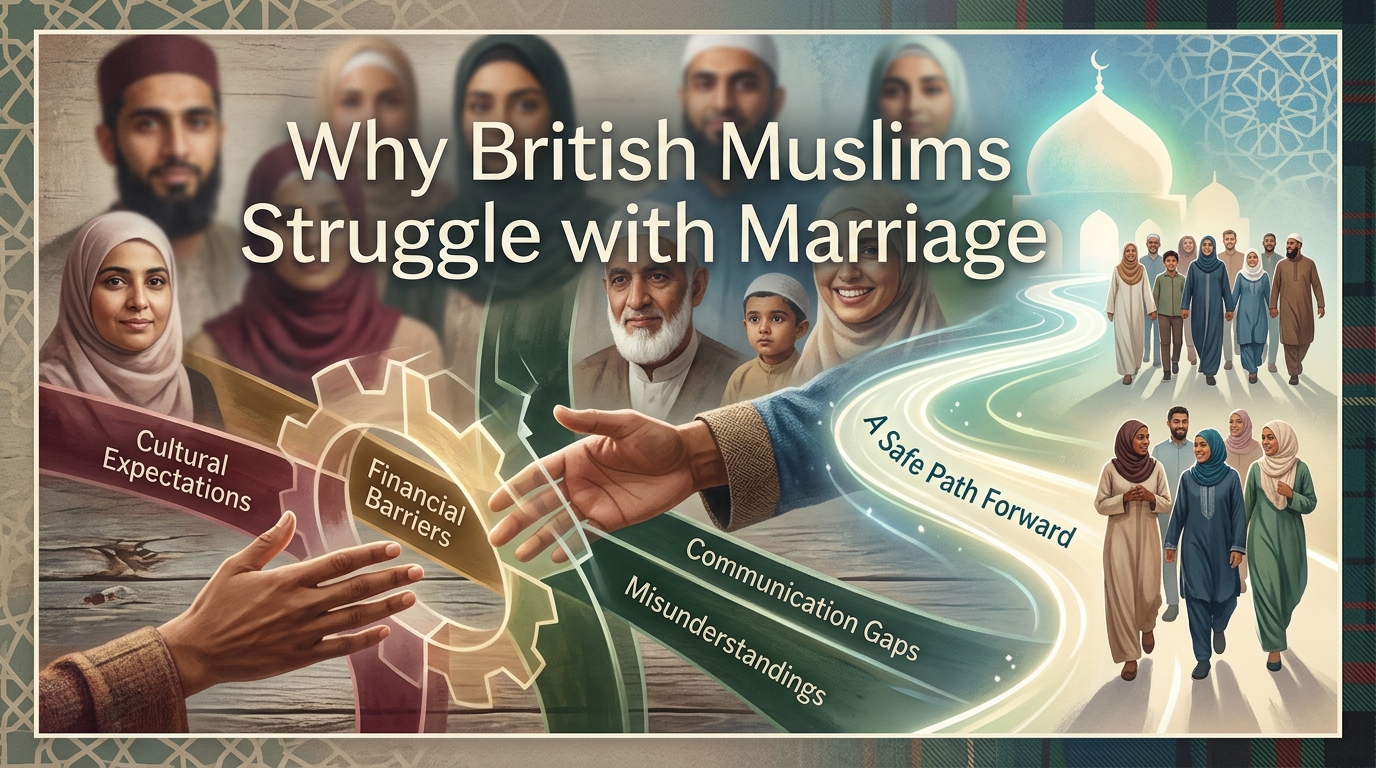
Here, we explore the primary reasons why British Muslims face obstacles when looking for marriage, and how a values-first, secure approach can restore trust and dignity to the process.
1. The Trap of Endless Swiping and “Option Paralysis”
Technology promised to connect us, but casual marriage apps have inadvertently fractured our approach to relationships. The modern “swipe culture” creates an illusion of infinite choice. When hundreds of profiles are just a swipe away, it becomes easy to treat human beings as disposable commodities rather than respected individuals.
This environment fosters several negative behaviors:
- The “Grass is Greener” Syndrome: Instead of taking the time to genuinely get to know someone, individuals often walk away at the first minor disagreement or awkward conversation, assuming a “perfect” match is just one more swipe away.
- Surface-Level Evaluation: Swiping shifts the focus entirely away from deep compatibility—like shared values, character, and faith. Instead, users are forced to judge potential life partners on superficial traits like professional photography, height, and perfectly curated bio blurbs.
- Ghosting and Burnout: Because there are no social boundaries or accountability mechanics on casual apps, users frequently experience sudden silence (ghosting). Over time, this leads to profound emotional fatigue and “marriage app burnout,” causing many serious individuals to give up on their search altogether out of sheer frustration.
2. The Checklist Trap: When Expectations Meet Reality
One of the biggest obstacles in modern matchmaking is the massive gap between what we hope to find and what actually exists in the real world. Today, it’s incredibly common for both men and women to enter the marriage search with a strict, mental checklist.
While it is completely reasonable to have high standards for your future spouse, demanding absolute perfection across the board creates a statistical impossibility. When we expect a single individual to simultaneously be a high-earning professional, deeply knowledgeable in the deen, flawlessly attractive, from the exact right family background, and an instant personality match—we set the bar so high that almost nobody can cross it.
Within an Islamic framework, this creates a secondary, high-stakes pressure cooker:
- The Fear of “Settling”: Because practicing Muslims intentionally avoid casual dating to keep things halal, the few supervised or chaperoned meetings you do get can feel incredibly high-pressure.
- The Defensive Disqualification: Instead of using these meetings to genuinely get to know someone’s character, people often use them as an interrogation. They apply their checklists rigidly and prematurely reject amazing, high-character individuals over minor, superficial details before a real connection even has a chance to breathe.
3. Modern Isolation and the Decline of Traditional Networks
Historically, marriages within the Muslim community were facilitated by tightly knit networks of families, local elders, and community institutions. If a young man or woman was looking to marry, aunties, uncles, and local imams would proactively introduce compatible families, acting as a natural, trusted vetting system.
Today, British Muslims face a profound sense of modern isolation:
- Disconnection from Traditional Roots: Many young adults live away from their extended families due to university, career choices, or relocation to different cities for work.
- The Breakdown of Informal Matchmaking: Traditional family networks have weakened or become less effective at navigating the subtle nuances of being a second- or third-generation British Muslim navigating modern society.
- The “WhatsApp Group” Chaos: In an attempt to bridge this gap, many have turned to unmanaged, chaotic WhatsApp marriage groups. These groups often lack privacy protections, run without verification, and leave individuals feeling exposed, overwhelmed, and vulnerable to unsolicited messages.
4. The Cultural vs. Religious Clashing Point
British Muslims often find themselves balancing two distinct worlds: the Western environment they grew up in and the heritage or cultural expectations of their parents. When these two spheres collide during the marriage process, it can create immense friction.
- Expectations of Roles: Cultural traditions often carry rigid expectations regarding gender roles, living arrangements (such as automatically living with extended in-laws), and career paths. Conversely, many young British Muslims seek a partnership model based on mutual consultation, shared household responsibilities, and emotional companionship—ideals firmly rooted in the Sunnah but sometimes at odds with deeply ingrained cultural habits.
- The Sub-Continental Caste or Ethnicity Filter: It remains unfortunately common for families to reject highly compatible, practicing individuals simply because they come from a different village, city, or ethnic background. This artificial filtering directly contradicts Islamic principles of equality and drastically narrows the pool of potential partners for no valid religious reason.
5. A Deep Lack of Premarital Education
We live in a society that invests heavily in preparing for the wedding day—the venue, the catering, the outfits, the guest list—but very little in preparing for the marriage itself.
- Navigating Conflict: Many couples enter into a Nikah without understanding how to manage finances as a team, navigate complex in-law dynamics, or communicate effectively and respectfully during disagreements.
- Unrealistic Expectations: Influenced by social media and romanticized media depictions, expectations of what a marriage should look like day-to-day can be highly distorted. When real life brings normal, inevitable challenges, couples who lack premarital guidance find themselves ill-equipped to cope, contributing directly to rising divorce statistics.
6. Skyrocketing Financial Strain
The economic reality of living in the UK today cannot be ignored. High inflation, rising housing costs, and intense societal pressure to host lavish, expensive weddings have created a massive financial barrier to marriage.
- Delayed Unions: Serious, marriage-ready couples are frequently forced to delay their Nikah for years simply to save up for an extravagant event that lasts only a few hours.
- Unnecessary Debt: Starting a new life together under the weight of heavy wedding debt puts immediate pressure on a marriage, fueling unnecessary stress and arguments from the very beginning of the relationship.
7. The Rise of Romance Fraud and Safety Concerns
Perhaps the most alarming obstacle facing British Muslims today is the erosion of basic trust online. Free, unverified spaces are hotbeds for scammers, catfishers, and individuals with insincere or malicious intentions.
The fear of being deceived, having personal photographs misused, or dealing with people who aren’t genuinely serious causes many practicing Muslims—particularly women—to hesitate when engaging with online matchmaking platforms entirely. Safety is no longer just a perk; it is an absolute necessity.
A Safe Path Forward
Creating a healthier environment for British Muslim marriages requires a shift in how families, couples, and community leaders approach the institution.
-
Mandatory Civil Registration: Couples must protect themselves legally by ensuring their Nikah is accompanied by a civil registration if resident in the west. This secures equal rights and financial protections for both partners under UK law.
-
Active Pre-Marital Counselling: Rather than relying on superficial matchmaking events, communities and mosques need to normalize structured, professional pre-marital coaching. These sessions should address critical topics like financial responsibilities, emotional vulnerability, and expectations of in-laws before the wedding.
-
Reframing the “Perfect” Spouse: Families must move away from rigid cultural checklists—such as specific village origins or unrealistic salary brackets—and focus instead on religious compatibility, character, and mutual respect.
Restoring Trust: A Safer Path to Completing Your Deen
The marriage landscape may feel broken, but it is not beyond repair. Addressing this crisis head-on requires a fundamental shift away from corporate, profit-driven swiping models toward an intentional, values-first sanctuary built on absolute trust, safety, and digital security.
At Muslim Marriage Services (MMS), we have designed a movement to protect your dignity and build stronger families for a healthier Ummah.
Here is how we are changing the journey to Nikah:
🛡️ Guaranteed Safety & Identity Verification
We believe trust is the foundation of marriage, not just an optional feature. To completely eliminate fake profiles, scammers, and catfishers, every single member on MMS must verify their identity using secure digital ID verification via Yoti, a global leader in biometric security. Additionally, members have the option to upload enhanced DBS certificates for absolute peace of mind.
🌱 Deep, Values-First Compatibility
Say goodbye to mindless swiping and superficial checklists. MMS provides tools like a free Big Five personality quiz and deep compatibility insights to help you look past surface-level traits. We focus on aligning your deen, life goals, and character so you can find a truly compatible life partner based on substance, not just a bio blurb.
👔 Family-Inclusive Accountability (DynamIQ Guardian™)
You don’t have to navigate this journey alone, nor should you have to compromise on your values. Our unique DynamIQ Guardian™ feature allows you to seamlessly invite your Wali or family members into the process, bringing traditional accountability and parental blessings into a modern digital space. Our ProfileShield™ technology ensures you maintain complete control over who sees your profile and media at all times.
🫶 Mission Over Profit (The Marriage Fund)
As a UK Certified Social Enterprise, we do not answer to corporate shareholders. We reinvest at least 50% of our surplus profits back into supporting global communities and building healthier marriages. Through The Marriage Fund, we dedicate £20 from every Premium upgrade to help serious, marriage-ready couples overcome financial barriers to their Nikah.
⚖️ Ethical, Balanced Leadership
Our platform is guided by the MMS Guardian Council, led by our founder, Hajji Mostafa, and guided by our female Shariah scholar Samara Iqbal of Aramas law, a global family law solicitor with over 20 years of experience. By placing women’s safety, perspectives, and Islamic dignity at the centre of our leadership, we ensure our space remains safe, respectful, and strictly aligned with Islamic values. Aramas Law provide world class advice for couples whether pre or post marriage. If you do require advice, please contact us and we will forward your details.
Final Thoughts: Approaching Marriage with Intention
Your journey to finding a spouse should be a source of peace, not anxiety. By stepping away from chaotic chat groups, superficial apps, and rigid perfectionism, and stepping into a safe, intentional sanctuary, you protect your heart and honour the sacred contract of marriage.
Let us approach marriage with the sincerity, intention, and clarity that Islam teaches us. Build your Deen with peace of mind.
Ready to start your journey? Join a verified, respectful community today.
👉 Register with Muslim Marriage Services
