

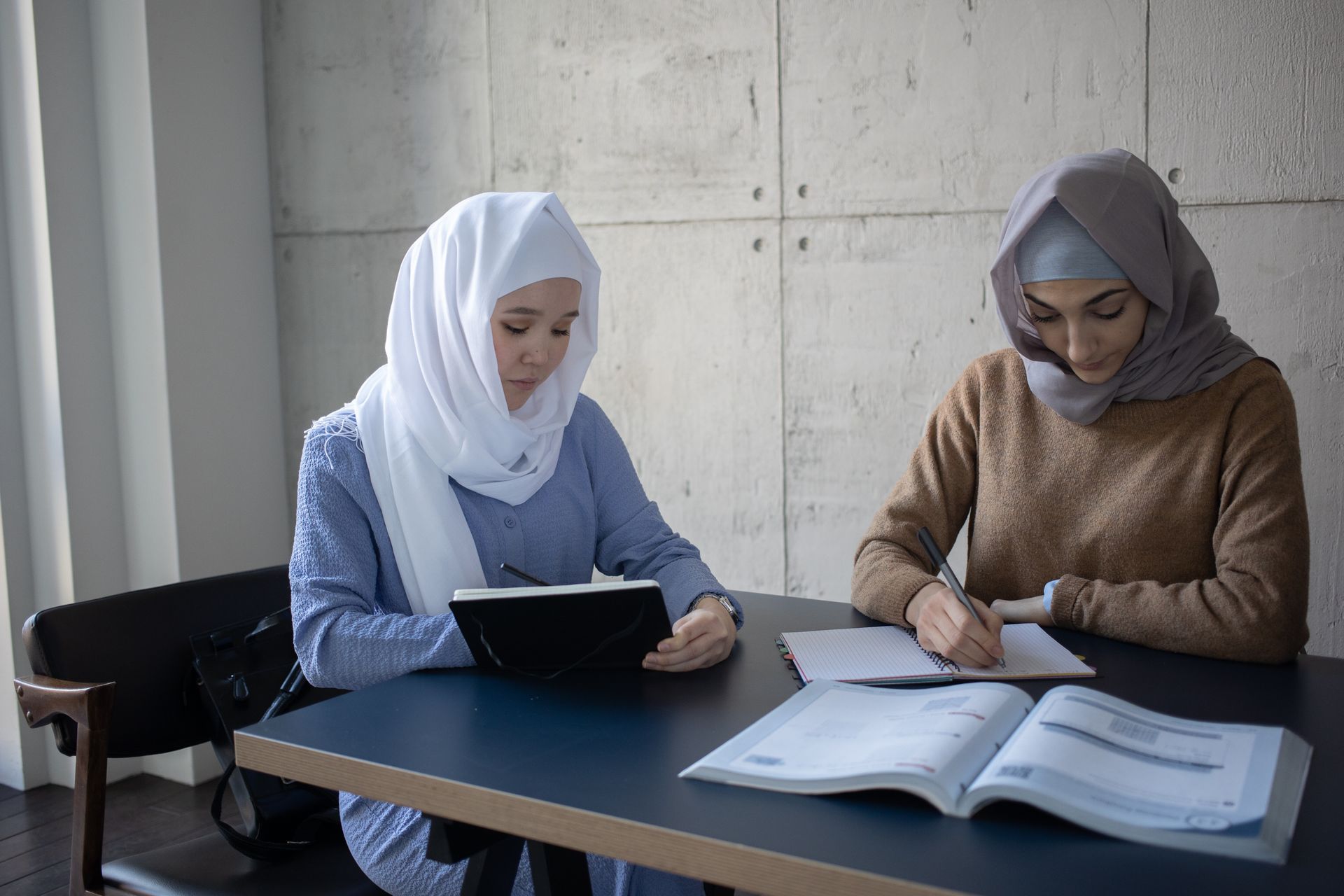
For generations, British Muslim women were given a clear, well-meaning instruction by their parents: Study hard, get your degree, secure your financial independence, and excel.
Our mothers and grandmothers, many of whom navigated unfamiliar Western environments without economic safety nets, wanted their daughters to be empowered. They poured prayers, sacrifices, and savings into ensuring the next generation of Muslim women reached the highest levels of academia, medicine, law, corporate strategy, and public service.
And British Muslim women delivered. Today, Muslim women represent one of the most academically ambitious and professionally successful demographics in the UK.
Yet, upon reaching these professional milestones, thousands of highly capable Muslim women find themselves confronting an unexpected, painful paradox: The very education, emotional maturity, and professional success they were encouraged to build is suddenly framed as their greatest liability in the marriage search.
When a 30-year-old female doctor, consultant, or teacher expresses difficulty finding a compatible partner, community whispers inevitably follow: “She focused too much on her career.” “Her standards are too high.” “She needs to compromise and lower her expectations before her biological clock runs out.”
At Muslim Marriage Services (MMS), we categorically reject this narrative. High-achieving Muslim women are not the problem, nor are their expectations “too picky.” The real issue is that our community’s matchmaking ecosystem has failed to evolve alongside them—trapping intentional women between regressive cultural pressures and toxic, superficial swipe apps.
It is time to dismantle the false narrative of “Career vs. Marriage” and establish a sanctuary where a woman’s mind, deen, and ambition are recognized as sacred assets.
1. The Anatomy of the “Study First, Settle Later” Trap
To understand why so many professional Muslim women feel exhausted by the rishta process, we must look honestly at the cultural double standard that governs their twenties.
Throughout university and early career building, young women are urged to keep their heads down and avoid “distractions.” However, the moment a woman hits her mid-to-late twenties, a cultural alarm bell sounds. In South Asian, Arab, and wider diaspora communities, an unwritten “expiry clock” is triggered.
Suddenly, the same family members who urged her to complete her postgraduate degree begin asking why she isn’t married yet.
This sudden shift creates immense cognitive dissonance. A woman who has spent a decade cultivating critical thinking, financial responsibility, and emotional independence is suddenly expected to revert to a passive role in traditional rishtasetups—where her age, ethnicity, and domestic compliance are scrutinized far more than her character or intellect.
2. The Legacy of Sayyidatina Khadijah (RA): A Prophetic Blueprint
The idea that a woman’s professional competence or financial independence makes her “unmarriageable” is not just culturally toxic—it is completely alien to Islamic tradition.
The premier role model for all Muslim women, Sayyidatina Khadijah bint Khuwaylid (RA), was an elite businesswoman, a wealthy international trader, and a woman of immense social standing. When she sought a spouse, she did not look for someone to shrink her status; she sought a partner whose honesty, integrity, and akhlaq (character) matched her standards.
She identified these traits in the Prophet Muhammad (ﷺ)—a man who respected her independence, managed her trade with absolute trustworthiness, and cherished her intellect.
"The Prophet (ﷺ) loved Khadijah (RA) not despite her strength and status,
but alongside the noble character and wisdom she brought to their sacred bond."
If our faith elevates the successful, self-driven woman as the first sanctuary of the Prophet (ﷺ), why has our modern culture reduced her success to a flaw? Wanting a husband who possesses emotional intelligence, shares your spiritual values, and respects your intellect is not “asking for too much.” It is asking for the Prophetic standard.
3. The Compatibility Gap: Fragile Masculinity vs. Emotional Maturity
Why do high-achieving women struggle to find compatible partners? The problem is rarely a shortage of unmarried men; it is a shortage of emotionally mature environments that foster genuine alignment.
When a woman reaches professional maturity, her criteria for a partner naturally shift:
- She is no longer looking for a partner simply to secure a roof over her head; she is looking for a spiritual and emotional partner (Sakinah).
- She values deep communication, shared financial stewardship, mutual respect, and active intellectual engagement.
However, mainstream matchmaking avenues repeatedly fail these women in two distinct ways:
A. The Traditional Rishta Network
Traditional family networks often prioritize external metrics—such as matching specific sub-castes, native languages, or family wealth—while ignoring psychological alignment. When a professional woman rejects a candidate who lacks emotional depth or holds regressive views on women’s autonomy, she is branded as “picky.”
B. The Commercial Swipe Apps
When women turn to mainstream “Muslim dating apps” out of frustration, the situation often deteriorates further. Mainstream apps are built on superficial, photo-first algorithms that reward dopamine hits, low accountability, and endless options. High-achieving women find themselves subjected to casual messaging, ghosting, catfishing, and men who are unready for the legal and spiritual weight of Nikkah.
4. Why “Lowering Your Standards” Is Dangerous Advice
When community members tell a professional woman to “lower her standards,” they are usually asking her to compromise on core psychological and spiritual compatibility.
Research and real-world marriage counseling confirm that marriages built on coerced compromises rarely thrive. Lowering standards on fundamental values leads to:
- Resentment: A wife who feels forced to suppress her intellect or career aspirations to appease a fragile dynamic will eventually experience emotional burnout.
- Communication Breakdown: A vast gap in emotional maturity or life vision prevents couples from navigating major life stressors—such as parenting, finances, and eldercare—as a unified team.
- Divorce: Entering a marriage out of age-induced panic rather than deep alignment significantly increases the risk of marital breakdown.
Compromising on flexibility (such as geographic location, height, or specific professional fields) is healthy. Compromising on character, deen, emotional maturity, and mutual respect is catastrophic.
5. Re-Engineering the Search: The MMS Sanctuary Solution
At Muslim Marriage Services (MMS), we recognized that telling women to “be patient” while leaving them in broken environments was unacceptable. High-achieving Muslim women do not need cliché advice; they need institutional safety, verified accountability, and deep matching frameworks.
We built MMS as a certified social enterprise to directly solve the challenges facing serious, professional Muslims:
1. Verification Eliminates Time-Wasters
By requiring mandatory Yoti Bank-Grade ID Verification and Anti-Money Laundering (AML) checks, MMS filters out anonymous, casual users before they ever enter the platform. A professional woman’s time is respected from day one.
2. Personality & Values Over Superficial Swiping
Instead of judging candidates in 0.5 seconds based on a polished selfie, MMS utilizes structured profiling anchored in Big Five Personality Insights and deep value alignment. You evaluate a man’s worldview, religious practice, emotional maturity, and family vision before making a connection.
3. Privacy-First Infrastructure (ProfileShield™)
For professional women in public-facing roles (surgeons, lawyers, teachers, corporate executives), privacy is paramount. Our ProfileShield™ technology ensures your photos and sensitive details are never exposed to public browsing or open search engines. You retain absolute control over who views your profile.
Conclusion: You Do Not Have to Shrink to Fit Into Marriage
To every high-achieving Muslim woman who has felt discouraged, misunderstood, or pressured to settle for less than a Shariah-compliant, respectful partnership: Your success is not a barrier to your Qadr.
The qualifications you have earned, the emotional maturity you have cultivated, and the standards you maintain are gifts to your future family. Marriage in Islam is intended to be a source of tranquility (Sakinah), love (Mawaddah), and mercy (Rahmah)—not an agreement that requires you to compromise your dignity.
Stop scrolling through dopamine-driven apps and step into an environment engineered specifically for intentional, verified Muslims.
👉 Step Into the Anti-Swipe Sanctuary: Join Muslim Marriage Services Today