
1. The Geography of Trust: When the Village Handled the Vetting
Once upon a time, finding a spouse was a deeply collective effort. Across Pakistan, India, and Bangladesh, the traditional rishta system didn’t just exist; it thrived as a highly reliable social ecosystem. In these close-knit environments, communities relied on local matchmakers—often the well-connected neighborhood “aunties”—who possessed a mental encyclopedia of every single family within a five-mile radius. If you wanted to know about a young man’s character or a young woman’s temperament, you didn’t ask for a digital resume. You simply asked your neighbor.
This historic system worked beautifully because it was built on three core pillars:
- Geographic Closeness: People lived, worked, and worshipped in the same tight spaces. Families had deep, visible roots in the community. If someone was untruthful or unkind, the news traveled by sunset. Reputation was the ultimate social currency, and no one wanted to bankrupt theirs.
- Built-In Verification: The neighborhood matchmaker didn’t have to guess if a family was decent. She had watched the children grow up, knew where the father worked, and understood their standing in the community. Her vetting was based on years of direct, personal observation.
- Zero Burden on the Couple: The young man and woman didn’t have to worry about how to pitch themselves to strangers, navigate the awkwardness of early conversations, or fear getting “ghosted.” The community and the families did all the heavy lifting, stepping in to protect both parties before they ever met.
This hands-off approach was perfect for a specific time and place. However, when those communities migrated to modern Britain, they brought the traditional rishta system along with them in their suitcases—but they left behind the very physical environment, the shared village, and the deep local networks that actually made it safe and effective to use.
2. Fractured Networks: Why the Marriage Process is Broken in the West
In modern Britain, almost every single one of those traditional safety nets has vanished. The British Muslim diaspora is incredibly diverse and highly dispersed. We are no longer living in tightly-packed village streets; we are spread out across bustling metropolises, quiet suburbs, and rural towns from London to Glasgow.
The Modern Dilemma: A traditional matchmaker living in London simply has no way of truly verifying a family living all the way in Scotland. The organic, trusted networks of the past do not exist at this scale.
Because we tried to copy-paste an old-world system into a busy, modern landscape, the matchmaking process has fractured. Today, families face several major challenges:
The Information Vacuum
Without a shared neighborhood, parents are often forced to make massive, life-altering decisions based on complete guesswork. When checking a family’s background, they have to rely on a chain of distant acquaintances. This lack of clear, direct information turns finding a partner into a high-stakes lottery.
The Generational Shift
Second and third-generation British Muslims have entirely different expectations for their lives and marriages. They aren’t looking for a spouse based solely on village lineage or family wealth. They want to find someone with shared intellectual values, emotional maturity, and spiritual compatibility. They want to actually talk and connect, yet the traditional system rarely allows the space or time for these deeper, necessary conversations.
The Privacy and Gossip Nightmare
Because the old system lacked structure, it has evolved into an informal, chaotic digital marketplace. Today, young people’s private photos, home addresses, and personal biodatas are routinely forwarded across casual WhatsApp group chats. This completely strips young Muslims—especially women—of their privacy, exposing them to widespread community gossip and judgment if a potential match doesn’t work out.
The Problem with Unaccountable Matchmakers
While many traditional matchmakers act out of genuine goodwill, the system itself has zero accountability. It is not uncommon for informal matchmakers to filter candidates based on outdated, un-Islamic biases like skin color, caste, or wealth, rather than looking at genuine character and Islamic compatibility. Even worse, some matchmakers may exaggerate a candidate’s good traits while actively hiding major red flags, leaving families with absolutely no safety net or recourse when things go wrong.
3. Bridging the Gap: Building a Modern, Safe, and Halal Path to Marriage
At Muslim Marriage Services (MMS), we believe that the core values of the traditional marriage process—family involvement, pure intentions, chaperoned meetings, and treating the commitment with the utmost seriousness—are completely worth preserving. However, the tools we use to find love must be redesigned to fit the world we actually live in today.
In an era where online romance scams and identity fraud cost UK victims over £106 million in a single year, relying on blind trust is no longer just outdated—it is dangerous. That is why we built the world’s only Certified Social Enterprise Muslim marriage platform to bring safety, transparency, and dignity back to the search.
We have replaced the old village network with state-of-the-art digital security, restoring the safety net that our community lost during the migration to the West:
a. Ironclad Identity Verification
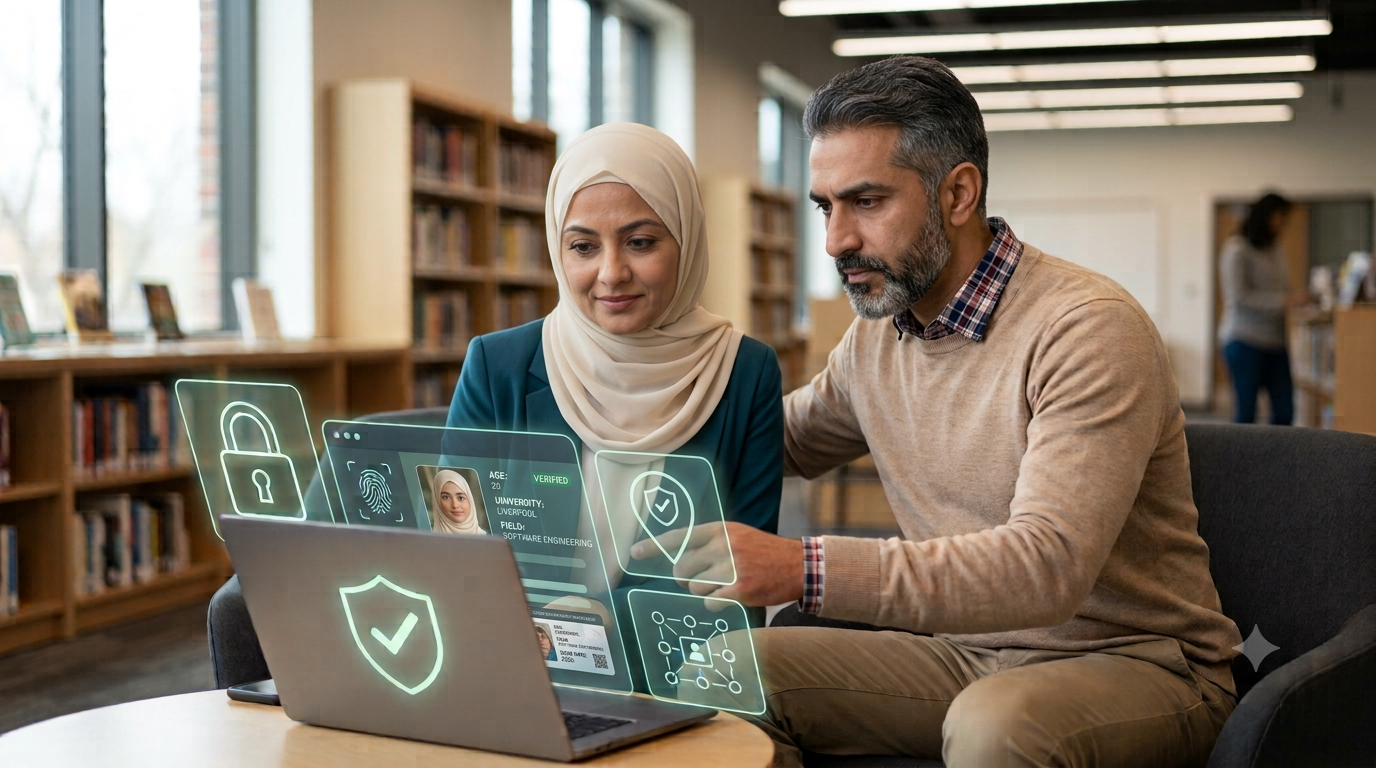
The biggest fear in online matchmaking is not knowing if a person is real. MMS completely solves this by partnering with Yoti, a world leader in AI-driven biometric identity solutions. Every single member on our platform must verify their ID. This completely eliminates catfishing, fake profiles, and bad actors, ensuring you are only communicating with real, serious individuals.
b. DynamIQ Guardian™ (Halal Chaperoning)
In the traditional system, families kept the process safe by being physically present. We have digitized this protection. Our unique DynamIQ Guardian™ feature allows users to easily add a mahram (chaperone) to monitor their chats. This keeps conversations respectful, transparent, and completely aligned with Islamic values, while giving parents ultimate peace of mind.
3. ProfileShield™ (Total Privacy)
You should never have to compromise your dignity to find a spouse. With our ProfileShield™ feature, your photos and personal details are fully protected. You retain absolute control over who gets to see your profile and when, completely bypassing the invasive gossip networks and leaked WhatsApp groups of the past.
4. Holistic Support and Education
We believe that a successful marriage requires more than just an introduction. Guided by our Guardian Council—which is led by a highly respected female Shariah scholar—MMS supports you at every step. We offer pre- and post-marital educational courses, relationship coaching, and we have even established a dedicated Marriage Fund to help eliminate the financial barriers that prevent young Muslims from completing their half of the deen.
The Way Forward
The traditional matchmaking blueprint served our families well for generations, but the modern world demands a redesign. We do not need to abandon our beautiful Islamic values of modesty, family involvement, and respect to find a partner in the digital age.
By combining cutting-edge security with timeless faith-based principles, MMS has built a space where you can search for a spouse with absolute peace of mind. We have brought the safety of the old village back—powered by the technology of tomorrow.